1. Strategic Procurement Overview: Sourcing Granular Cat Litter for the Florentine Pet Sector
The pet care ecosystem across Florence (Firenze) and the greater Tuscany region has undergone a structural transition over the past five years. Driven by rising feline adoption rates within dense urban centers—spanning historical quarters like Centro Storico, San Frediano, Campo di Marte, and Rifredi, as well as peripheral hubs like Prato, Scandicci, and Sesto Fiorentino—the demand for high-performance, odorless, and ecologically viable granular cat litter has accelerated sharply. For commercial category buyers, regional pet distribution networks, and emerging Italian e-commerce brands, partnering directly with primary original equipment manufacturers (OEM) in China is no longer merely a margin-arbitrage play; it is a necessity for formulation exclusivity, consistent raw-material supply, and rapid adaptation to stringent European environmental mandates.
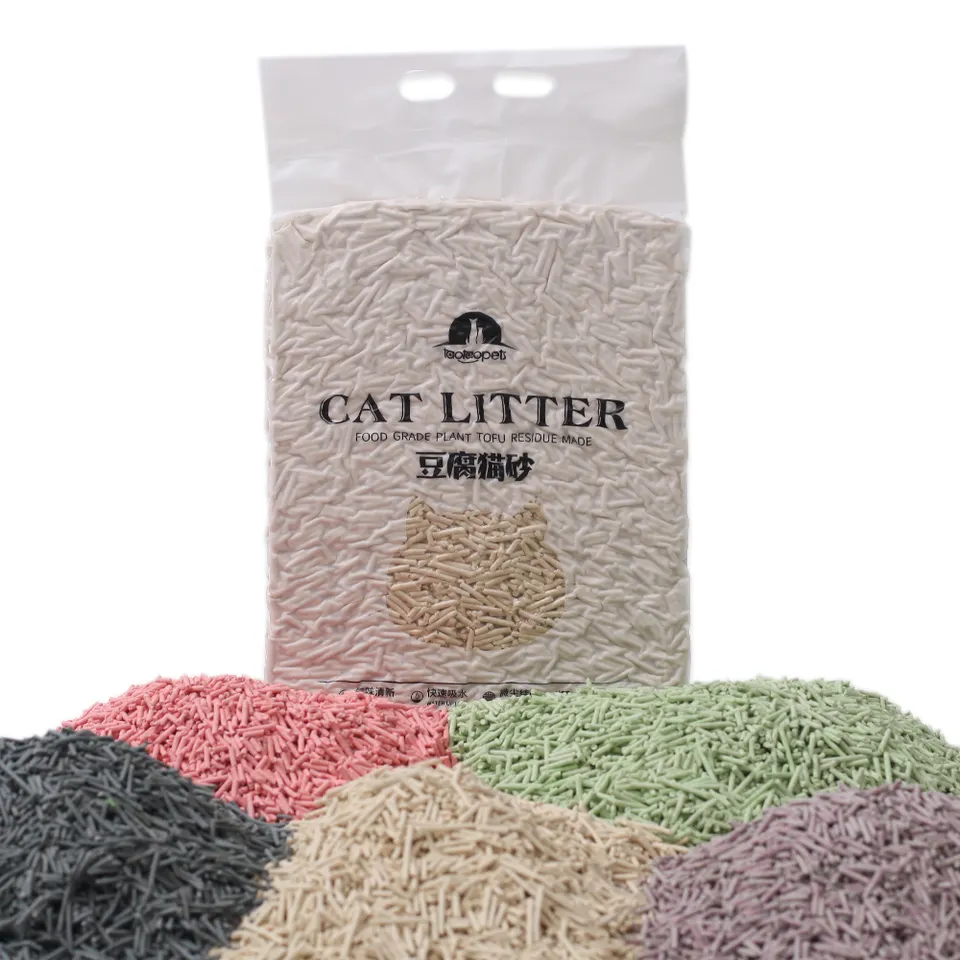
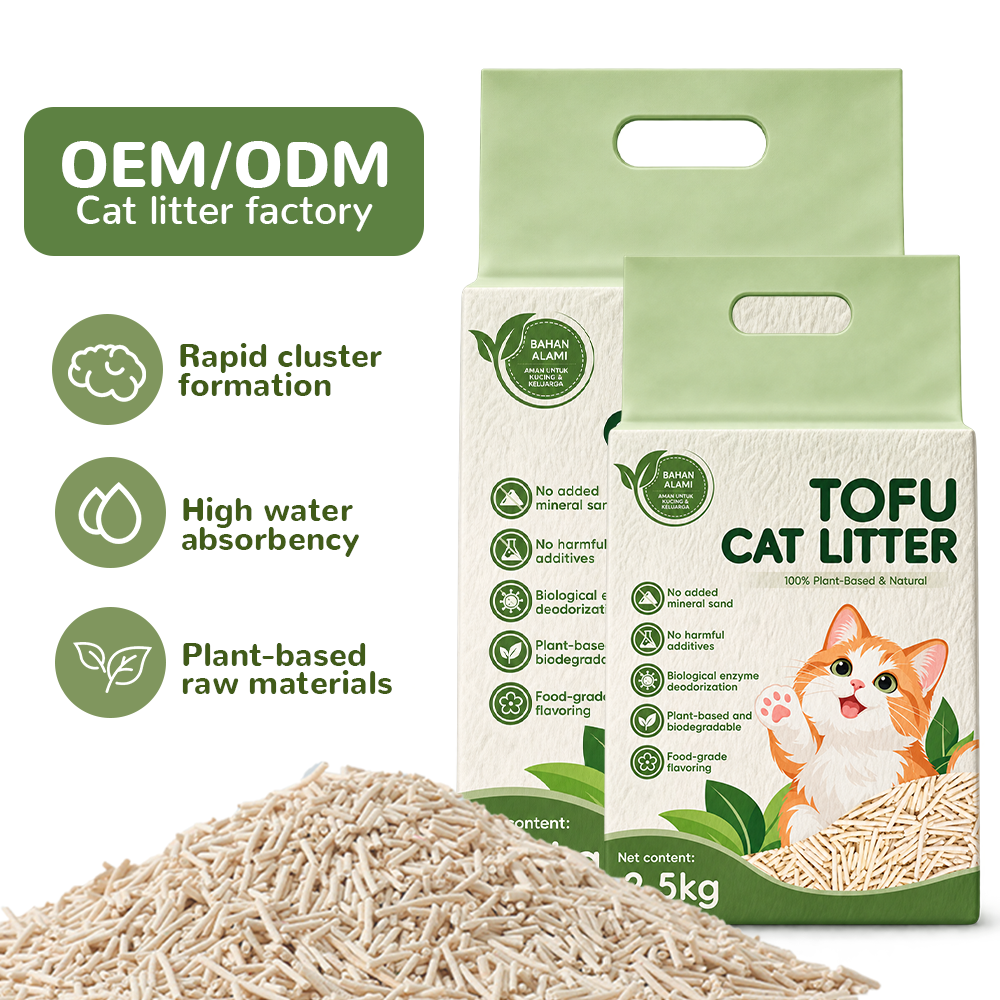
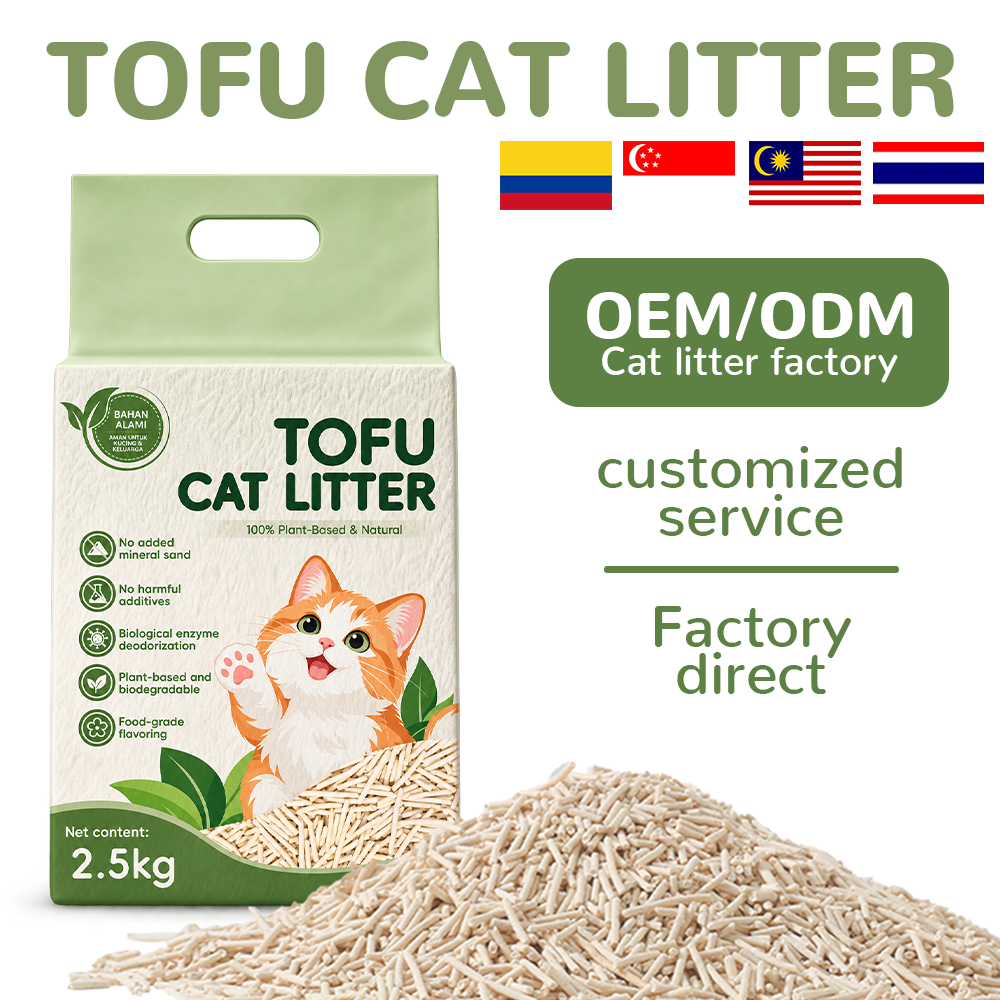
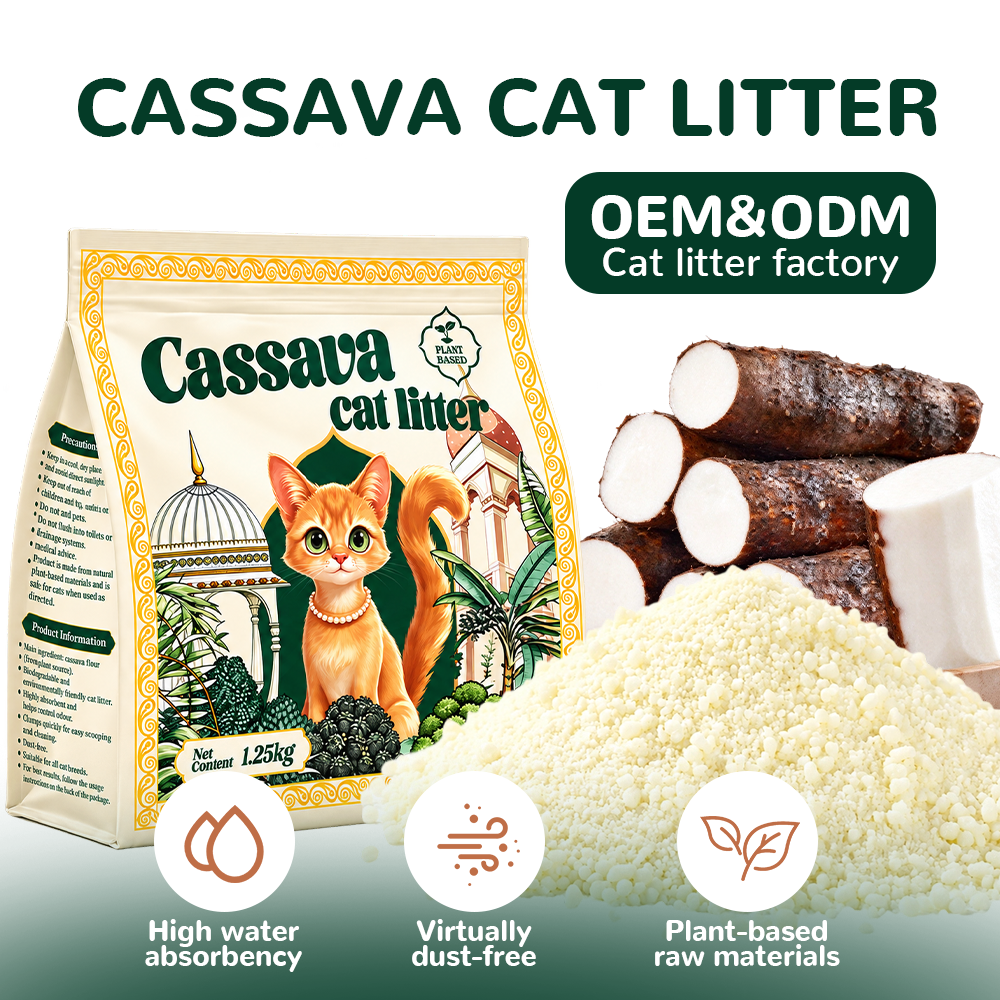
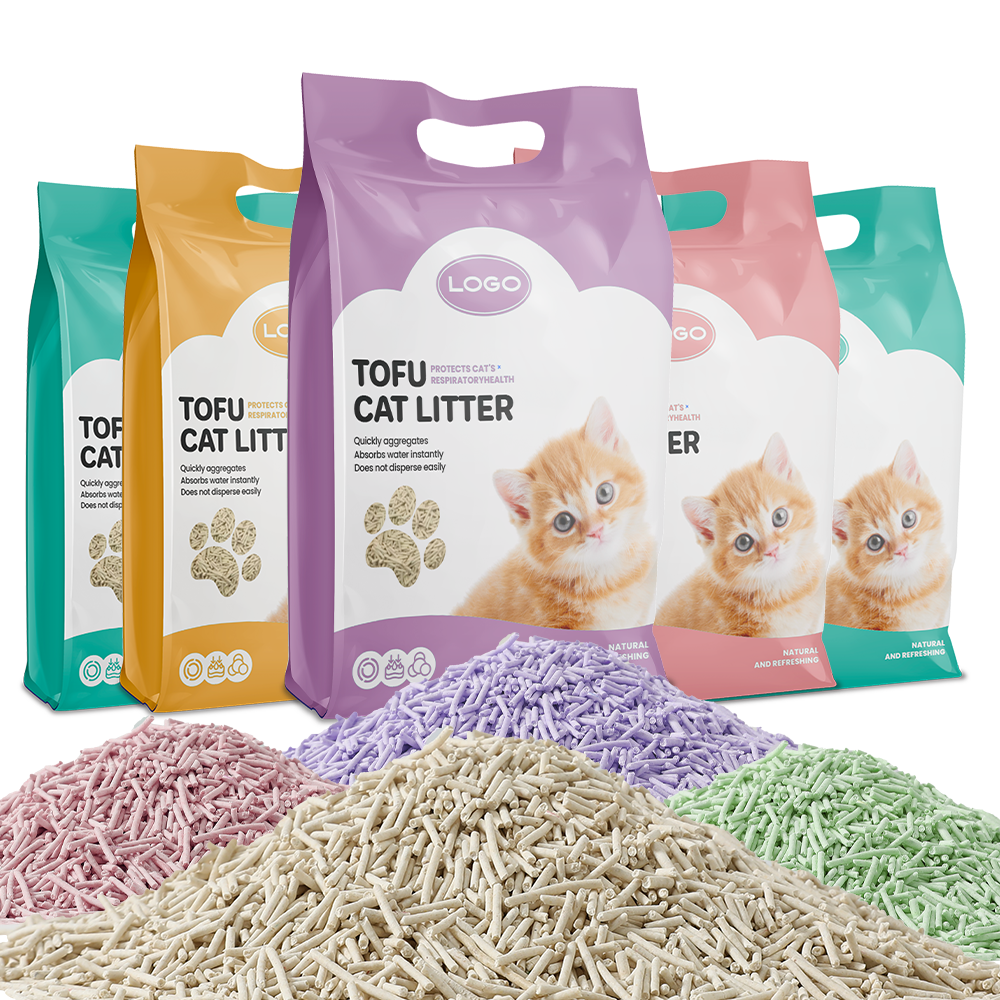
Hebei Chupen Pet Products Co., Ltd., located in the premier Nanhe pet industrial belt of Xingtai, operates at the absolute center of China's pet manufacturing capacity. The Nanhe industrial cluster accounts for approximately 80% of China's pet food production and over 60% of its pet hygienic supplies. By leveraging integrated supply lines, our production facilities provide Florentine and Italian importers direct factory pricing, end-to-end quality assurance, and precision batch customization. Rather than relying on generic trading intermediaries, commercial enterprises in Florence can now source custom-calibrated sodium bentonite, rapid-dissolving tofu (soybean curd residue), resilient cassava starch granules, and specialized odor-adsorbing silica crystals engineered specifically to withstand the unique climatic and infrastructural conditions of Central Italy.
"Sourcing success in Tuscany relies on three critical pillars: compliance with Alia Servizi Ambientali's municipal organic sorting (*raccolta differenziata*), anti-clogging safety for older Renaissance-era drainage systems, and extreme ammonia containment throughout sweltering Tuscan summers."
2. Florentine Localization Matrix: Regulatory Constraints and Architectural Realities
Selling cat litter in Florence requires acute awareness of local living realities and municipal laws. Unlike suburban American or Northern European markets characterized by spacious standalone homes with dedicated utility rooms, residential Florence is dominated by multi-story historical palazzi, compact apartments (*bilocali*), and preserved stone architecture. These structural traits introduce operational hurdles that every category manager must resolve:
A. Antiquated Drainage Infrastructure & Hydraulic Clearance
In central Florence (such as neighborhoods surrounding Santa Maria Novella, Piazza Santo Spirito, and Sant'Ambrogio), interior domestic waste pipes often date back to early 20th-century retrofits or older historic plumbing channels. Traditional coarse calcium or sodium bentonites, which form dense cementitious deposits upon contact with water, represent an extreme plumbing liability if disposed of via domestic water closets. A major market shift has occurred toward plant-based, flushable granular litters—predominantly our 1.5mm to 2.0mm extruded tofu strips and high-purity cassava starches. When dropped into turbulent water, our engineered tofu pellet breaks down within 18 seconds into a dispersed, non-viscous organic slurry with low specific gravity, eliminating blockages in narrow gravitational pipes.
B. Municipal Waste Compliance: Alia Servizi Ambientali SpA
Waste collection across the Metropolitan City of Florence is strictly regulated by Alia Servizi Ambientali SpA. The city enforces door-to-door or RFID smart-bin separation (*raccolta differenziata*). Cat litters labeled as "biodegradable" must conform with standards aligned with UNI EN 13432 for industrial or domestic composting, permitting disposal in the organic fraction (*frazione organica umida*). If an imported litter fails degradation or contains artificial chemical adhesives or non-biodegradable synthetic perfumes, end-users face municipal fines, and brand owners suffer reputational damage. Chupen's plant-based line utilizes 100% human-grade, byproduct soybean meal, pea fiber, and native tapioca starch, bound solely by food-grade starches and natural guar gum, guaranteeing uncompromised organic bin disposal acceptance.
C. Microclimate Dynamics: The Florentine Summer Heat Basin
Geographically situated in a river valley basin enclosed by Tuscan hills, Florence experiences hot, dry, and stagnant summers (often exceeding 38°C in July and August) with minimal natural air circulation within thick-walled apartments. Under these thermal conditions, microbial urease activity skyrockets, hydrolyzing feline urea into volatile ammonia gas ($NH_3$) and volatile sulfur compounds ($VSCs$) in hours. To combat this, Chupen integrates a multi-tier odor combat system: nano-porous activated carbon particles, biological bacteriostatic enzymes that halt bacterial proliferation, and natural cyclodextrin cages that physically lock odor molecules within the dry granule.
3. Technical Material Comparison: Evaluating Granular Litter Substrates
When drafting an OEM product portfolio for Tuscan distribution, selection of raw material determines your retail margin, shipping efficiency, and consumer satisfaction score. The table below represents empirical data from Chupen's 9 in-house QA laboratories:
| Granular Substrate | Absorption Ratio | Clump Integrity (Drop Test) | Dust Index (<100μm) | Biodegradability / Flushability | Optimal Channel Strategy in Tuscany |
|---|---|---|---|---|---|
| Micro-Extruded Tofu (1.5mm Pea Fiber) | 400% - 450% by weight | > 98% retention from 1m | < 0.08% mass fraction | 100% Biodegradable / Flushable | Specialty pet boutiques, city center e-commerce, urban retail |
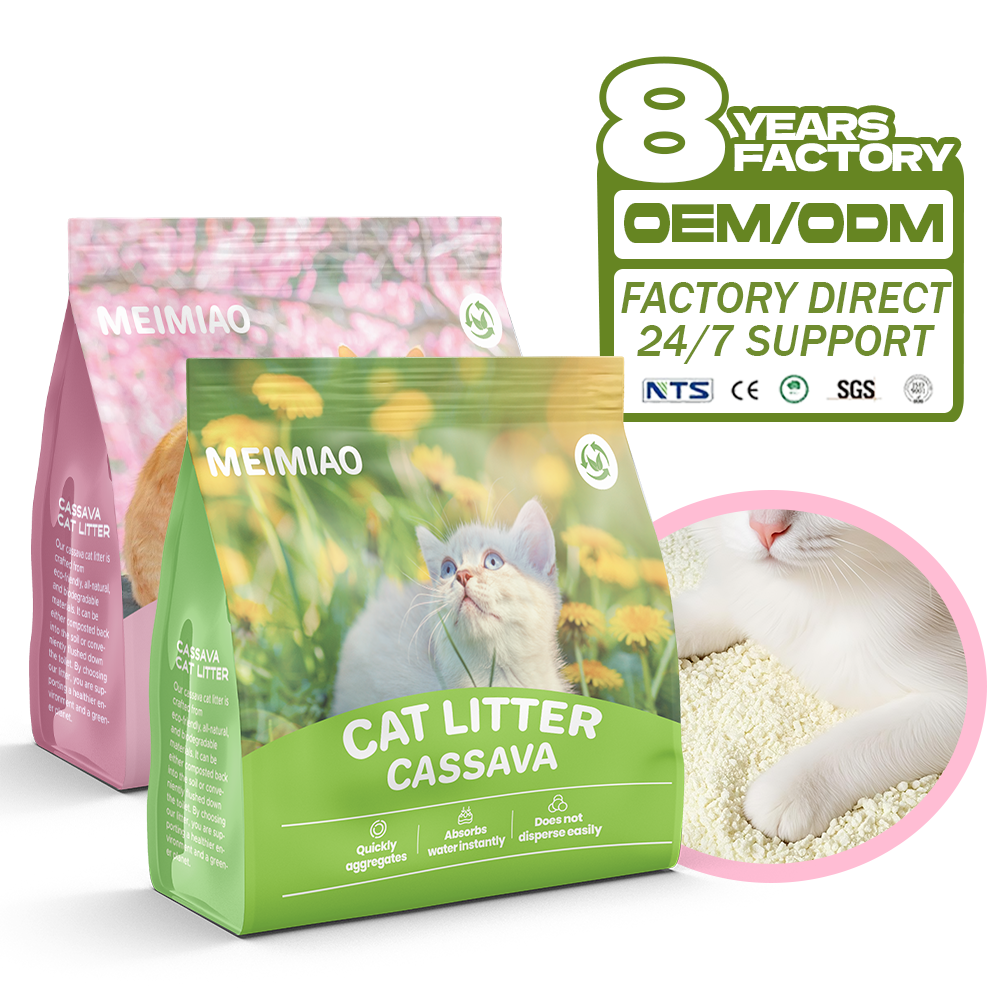
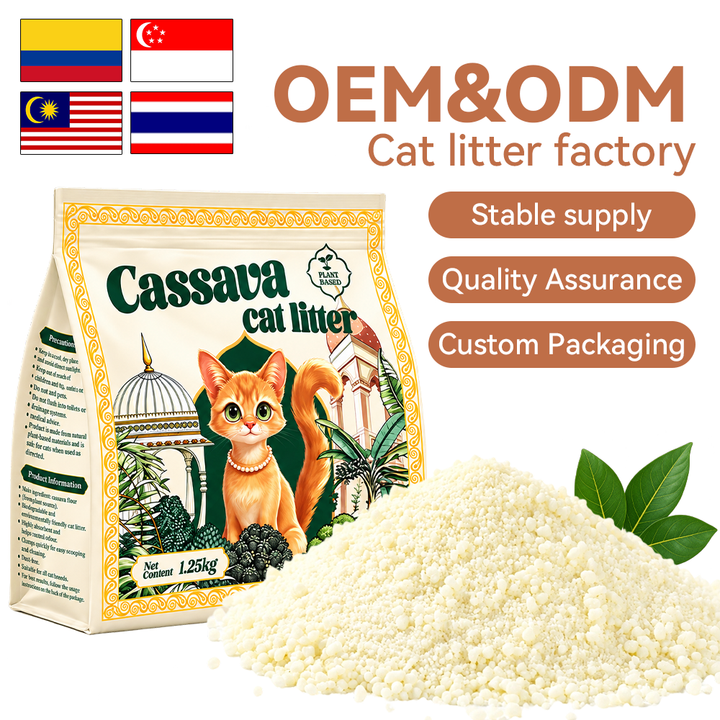
| Pure Cassava Root Granules | 500% - 550% by weight | > 99% (Rock hard disc) | < 0.05% (Near Zero) | 100% Biodegradable / Semi-Flushable | Ultra-premium organic shops, hypoallergenic veterinarian lines |
| Sodium Bentonite (Crushed Agglomerate) | 300% - 350% by weight | > 95% solid ball | 0.5% - 1.2% (Triple Dedusted) | Non-flushable / Landfill (Indifferenziato) | Suburban hypermarkets (Coop, Esselunga), price-competitive mass retail |
| Engineered Silica Gel (Macro-Porous) | 80% - 100% (Non-clumping) | N/A (Liquid Absorption) | < 0.2% mass fraction | Synthetic / Residual Waste Bin | Low-maintenance apartment cat owners, lightweight logistics focus |
4. Supply Chain Topology: Maritime Routing from Tianjin to Tuscany (Livorno / La Spezia)
Supply chain resilience is vital for high-volume, low-margin freight like cat litter. Hebei Chupen's factory footprint in Nanhe, Xingtai provides direct proximity to China's premier northern shipping gateway: Tianjin Port (Xingang). Containerized freight is routed via high-efficiency bonded trucking lines directly to Tianjin's automated container terminals.
For Tuscan importers, sea freight is routed via the Suez Canal / Mediterranean trunk line directly calling at either the Port of Livorno (Leghorn)—the primary maritime gateway to Tuscany—or the Port of La Spezia. Standard transit times from Tianjin to Livorno typically range between 24 and 32 days under normal maritime routing.
Upon vessel discharge at Livorno, cargo clearance is facilitated directly through Italian Dogana (Customs) under TARIC code 2508.10.00 for bentonite clays, or 2309.90.96 / 1404.90.00 for plant-based residues (subject to phytosanitary declaration and veterinary clearance where applicable). From Livorno, containers are shuttled via the FI-PI-LI (Firenze-Pisa-Livorno) expressway or dedicated rail links directly to regional intermodal depots: the Interporto Toscano Amerigo Vespucci in Guasticce, or the primary distribution logistics cluster in Osmannoro / Campi Bisenzio on the northern periphery of Florence. This enables door-to-door delivery inside 36 hours from customs release.
5. Hebei Chupen Manufacturing Scale & Quality Engineering
Chupen operates a fully integrated industrial manufacturing complex designed specifically for global volume contracts and high-spec private labeling. With 11 high-capacity automated production lines, the factory provides stability that eliminates seasonal out-of-stock crises.
Daily Volume Output
Operating 5 dedicated tofu lines delivering 150 tons/day, 3 bentonite granulation units producing 3,000 tons/day, and 3 silica processing tracks (150 tons/day). Accommodates concurrent multi-container export schedules with zero bottlenecking.
9-Point In-House Lab Testing
Each production run is monitored for moisture threshold (<10%), moisture absorption coefficient, dust particle release rate under vacuum agitation, ammonia headspace neutralization index, and microbiological plate counts.
University Research Tie-Ups
Active collaborative R&D with China Agricultural University and Hebei Agricultural University. Formulations focus on non-GMO food processing byproducts, bio-deodorizers, and hypoallergenic granular texturizing.
6. Comprehensive 8-Stage OEM/ODM Engineering Workflow
To ensure that private-label products arriving in the warehouse of a Florentine distributor mirror agreed specifications, Chupen operates under an 8-stage gated execution framework:
Analysis of target channel (Italian mass retail vs. veterinary specialty), price corridor, packaging size (6L/10L/20kg), and local compliance requirements.
Selection of core base (tofu, cassava, bentonite, silica), granule caliber (1.5mm micro vs 3.0mm standard), fragrance micro-encapsulation, and colorants.
Production-line sample synthesis replicating mass batch conditions. Sent via express courier to Florence for physical inspection and clumping evaluation.
High-barrier rotogravure or digital flexographic printing on PET/PE, vacuum foil bags, or multi-wall craft paper cartons with European EAN-13 barcodes.
Formal validation of clumping duration, dust yield, scent release, artwork accuracy, and pallet packing blueprint prior to deposit and PO initiation.
Automated compounding, high-pressure extrusion, drying, microwave sterilization, multi-stage screening, and high-speed automated packaging runs.
Systematic batch testing across 9 laboratory parameters. Third-party onsite inspection (SGS, TÜV, Bureau Veritas) warmly supported upon buyer request.
Container drayage to Tianjin Port, maritime freight booking, customs manifest clearance, and multimodal tracking directly to Tuscan receiving facilities.