Featured Private Label Cat Litter Formulations for Graz & DACH Retailers
Engineered in ISO-certified, SGS-audited facilities to meet European eco-compliance standards, flushability benchmarks, and modern urban apartment odor-neutralization requirements.
Executive Industry Whitepaper: The Graz & Austrian Pet Substrate Market
As Austria’s second-largest urban center and the economic capital of Styria (Steiermark), Graz represents one of the most sophisticated, eco-conscious pet hygiene markets in Central Europe. Characterized by high-density historical residential structures (Altbauwohnungen) throughout districts like Innere Stadt, Geidorf, and St. Leonhard, cat guardians in Graz face unique challenges regarding indoor air quality, particulate dust inhalation, and residential wastewater management. Concurrently, municipal ecological directives under the Styrian Waste Management Act (Steiermärkisches Abfallwirtschaftsgesetz) impose stringent benchmarks on household waste segregation, incentivizing non-mineral, bio-based alternatives.
For pet brand owners, retail chains (such as regional distributors supplying Fressnapf, Das Futterhaus, and localized independent pet shops), and European private-label brand incubators, the Graz market acts as a bellwether for wider DACH (Germany, Austria, Switzerland) consumer adoption. In this whitepaper, we dissect the physicochemical dynamics of modern cat litter, benchmark the top global exporters servicing the Central European corridor, examine intermodal freight optimization via the Southern Rail Corridor and the Port of Koper directly into Cargo Center Graz (CCG), and outline private-label contract manufacturing best practices.
Physicochemical Benchmarking: Moisture Absorption, Dust Index, and Carbon Footprint
Technical evaluation of cat litter efficacy requires measuring four foundational parameters: liquid absorption ratio (gravimetric method), agglomeration clump shear strength (measured in Pascals), dust particulate fraction (PM2.5 and PM10 aerodynamic diameter), and total lifecycle greenhouse gas (GHG) emissions per feline lifecycle month.
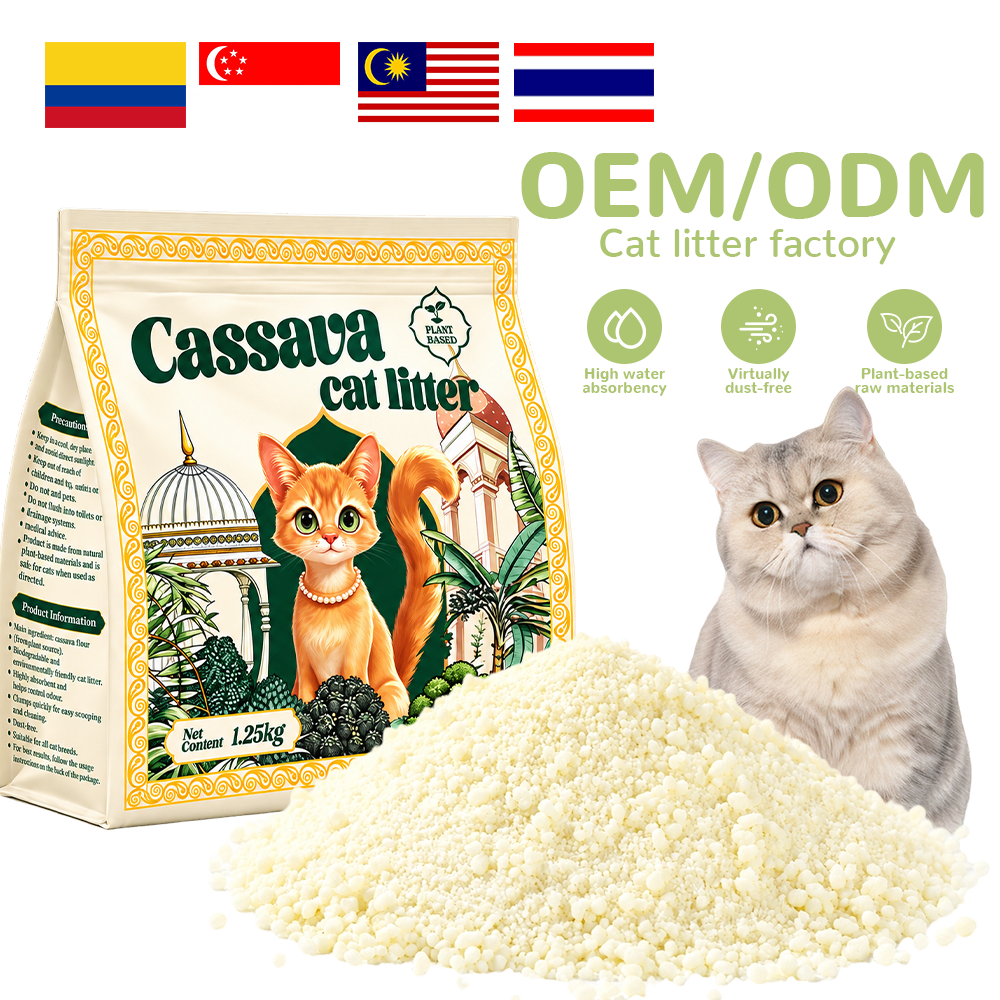
| Substrate Category | Primary Material Basis | Liquid Absorption Ratio | Agglomerate Clump Strength | Dust Index (PM 10) | Austrian Waste Disposition | Landed Cost Index (Graz DDP) |
|---|---|---|---|---|---|---|
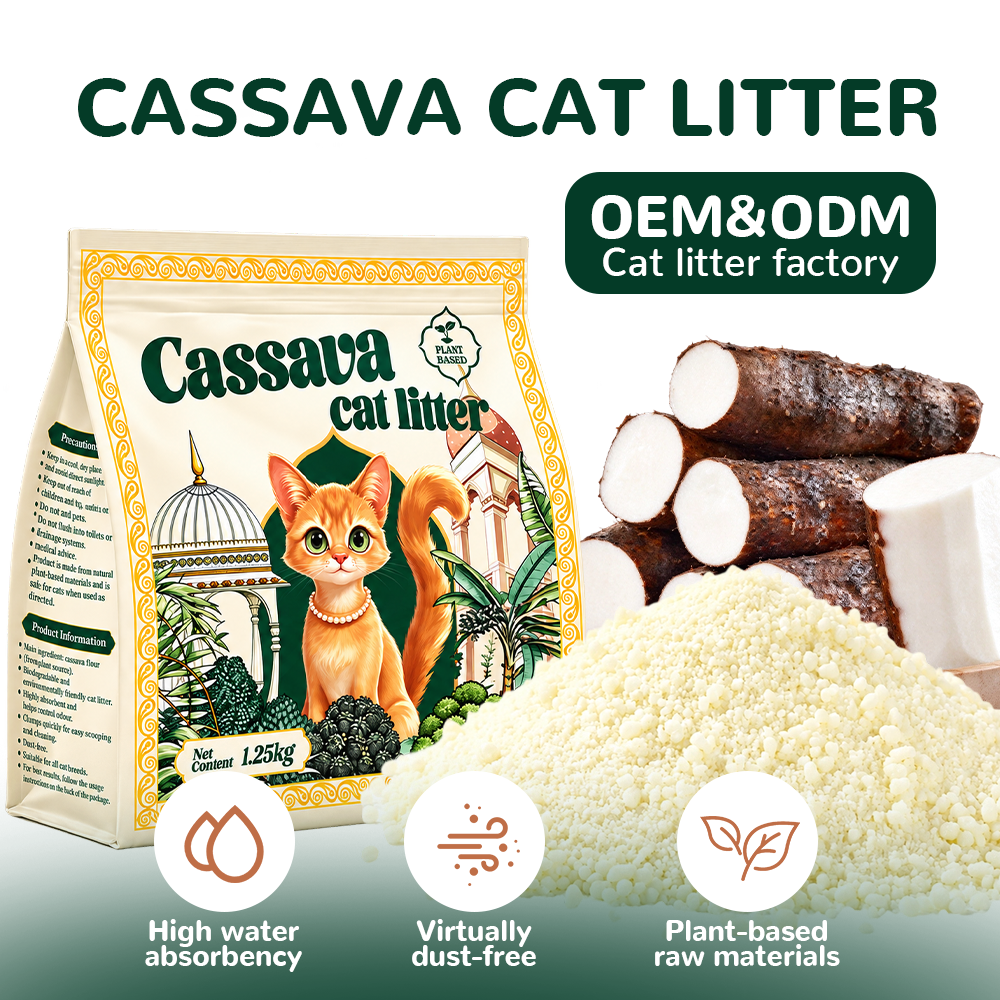
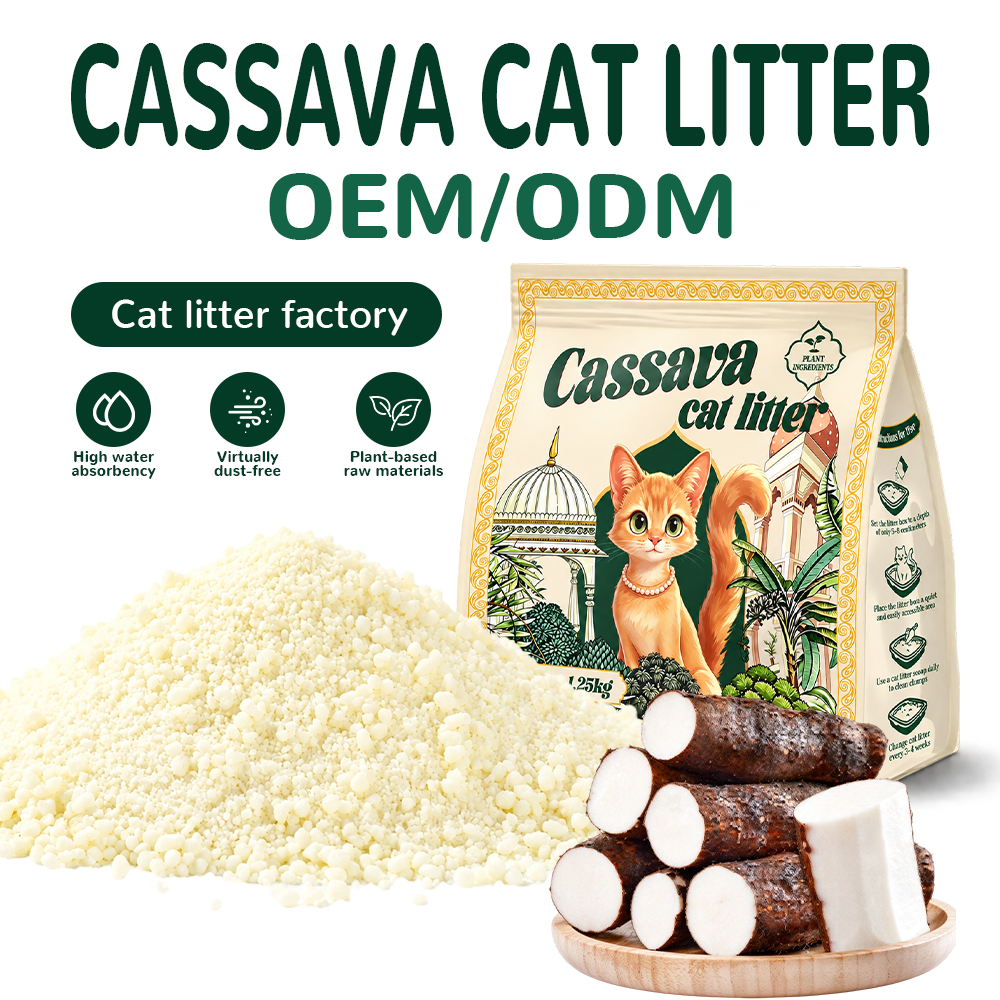
| Cassava Starch Litter | Manihot esculenta root tuber | 400% – 480% w/w | > 850 g/cm² (3-sec snap) | < 0.1% (Quad-screened) | Industrial Composting / Residual | Tier 3 (Premium Organic) |
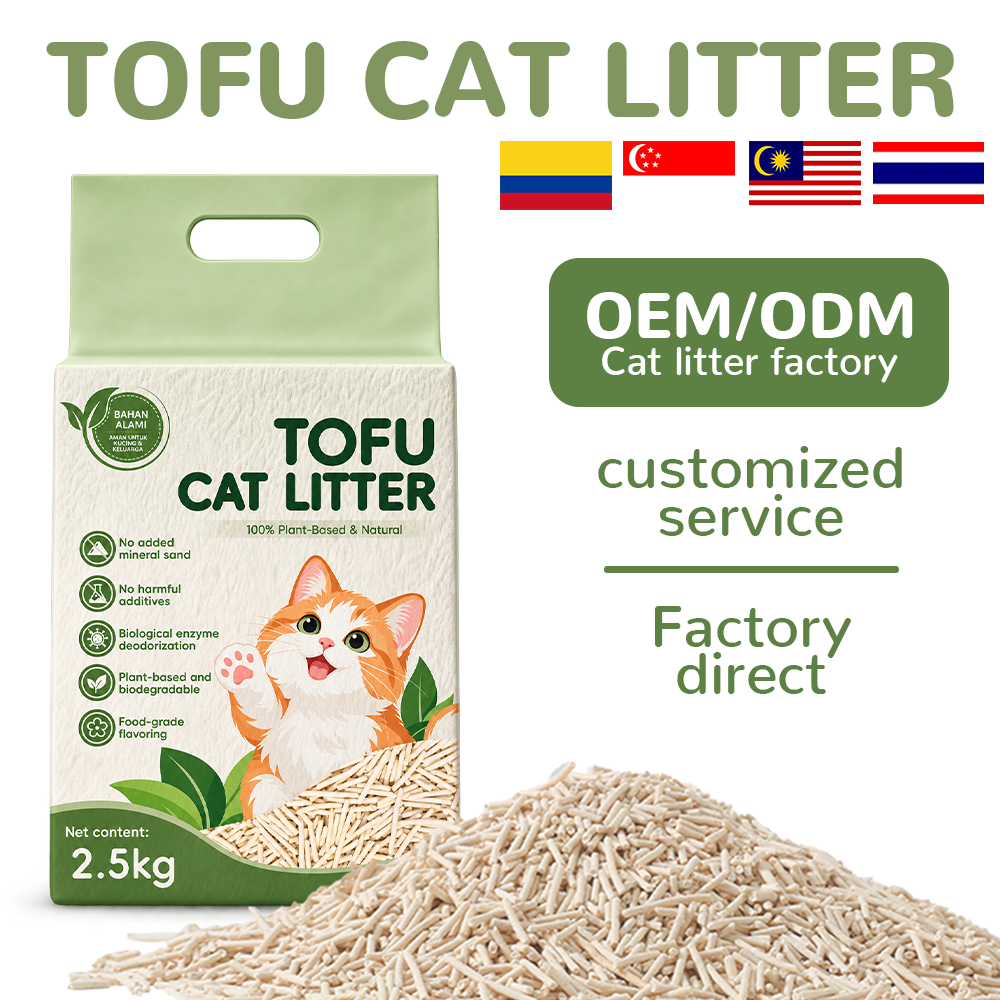
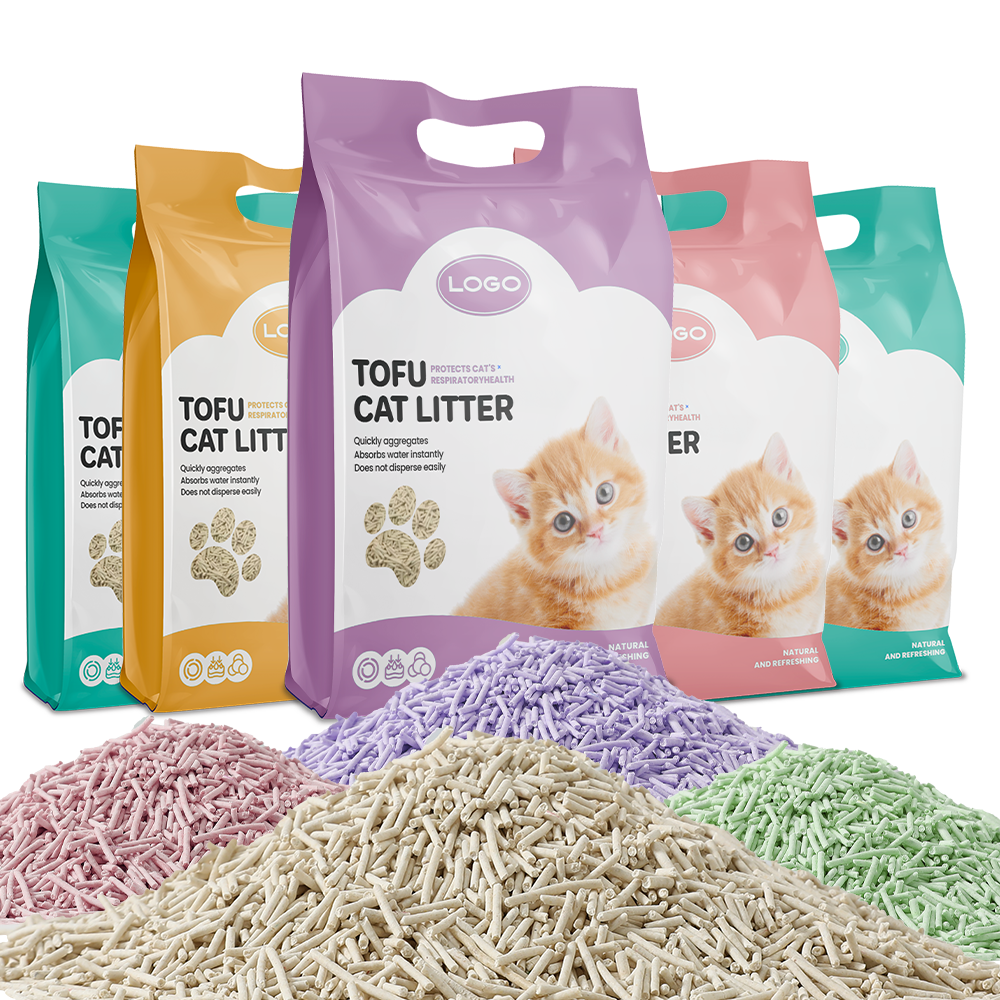
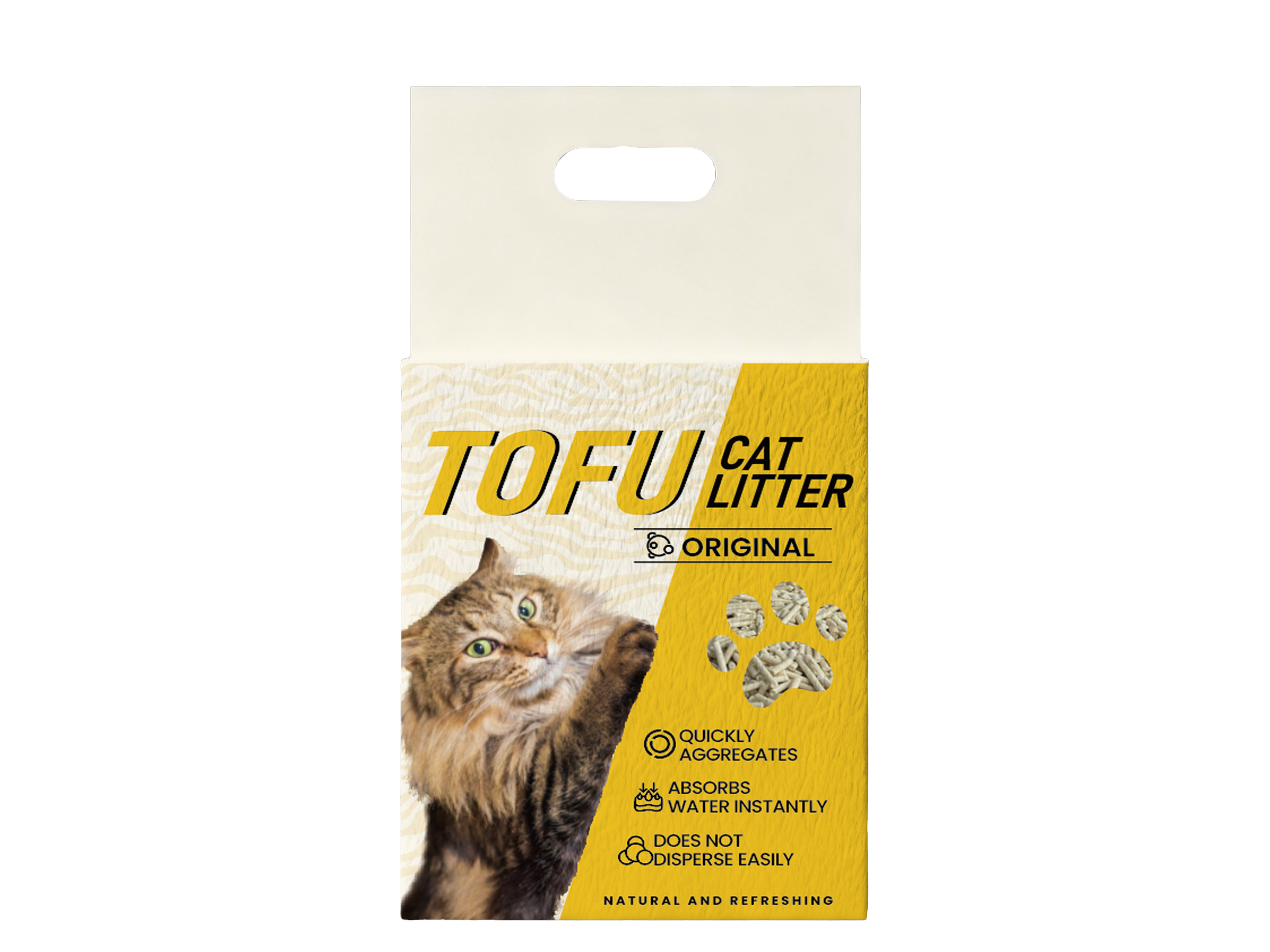
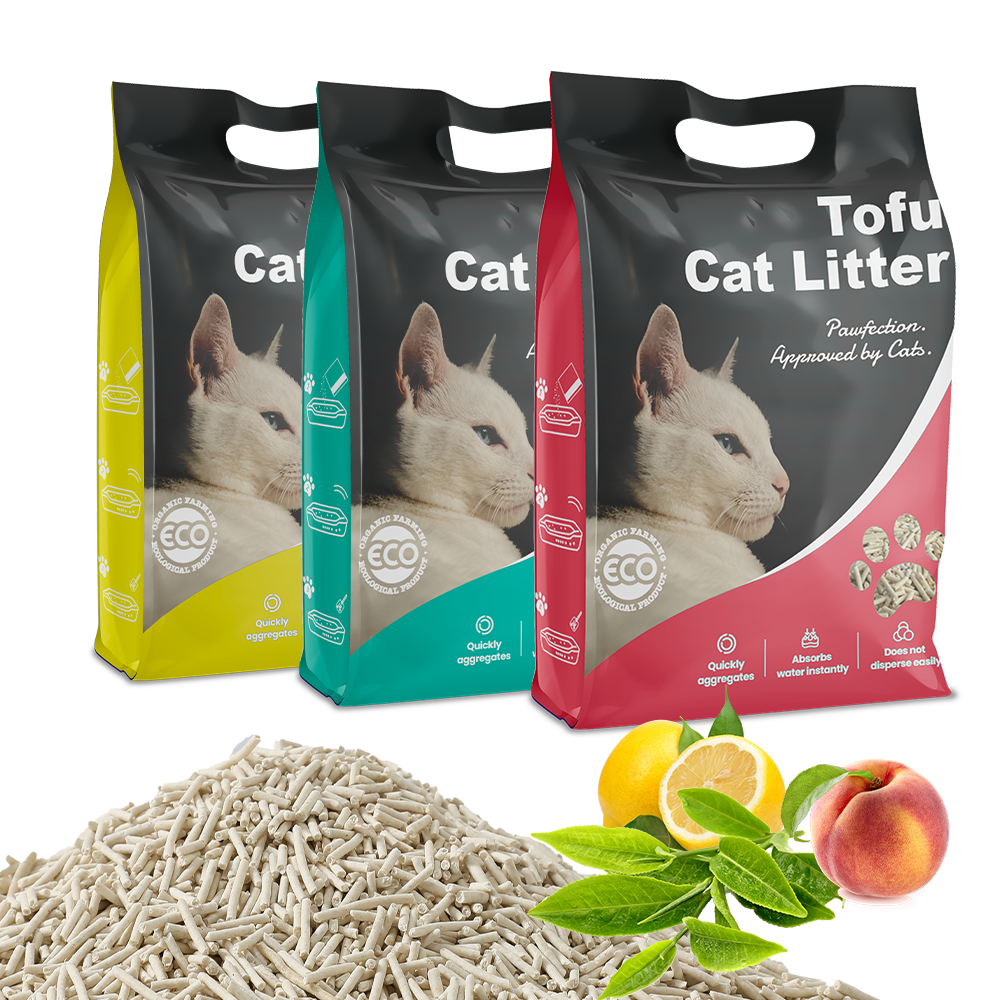
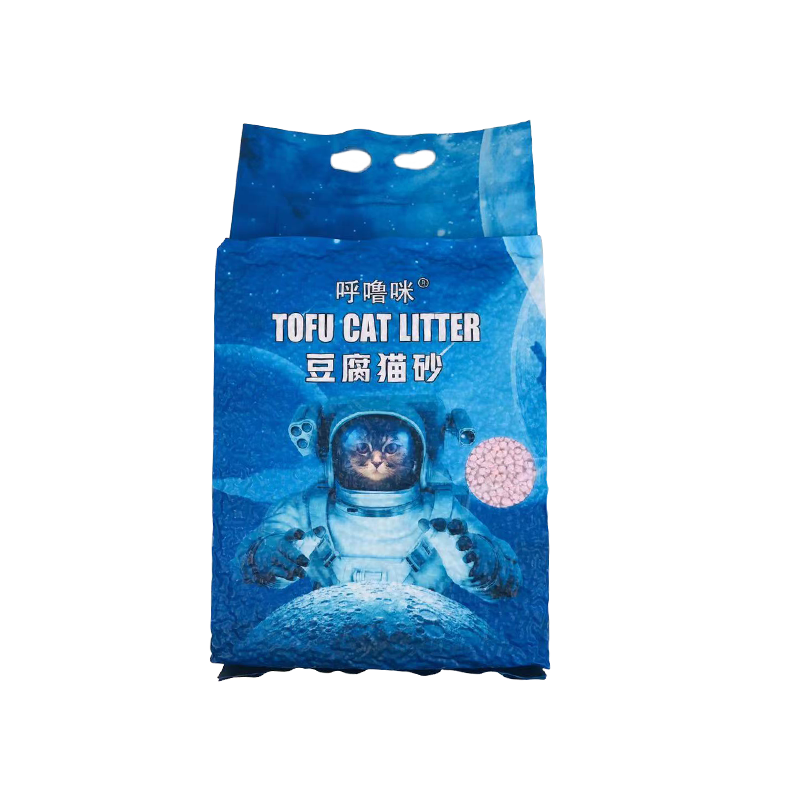
| Tofu Cat Litter (Pellet) | Food-grade soybean okara + starch | 320% – 380% w/w | > 700 g/cm² (Firm disk) | < 0.2% (De-dusted) | Municipal Flush / Bio-waste* | Tier 2 (High Margin Core) |
| Hybrid Corn-Tofu Spheres | Zeamays flour + plant gums | 350% – 410% w/w | > 780 g/cm² (Spherical) | < 0.15% (Anti-crumble) | Biomass Recovery / Compost | Tier 2.5 (Differentiated) |
| Sodium Bentonite (Mined) | Montmorillonite smectite clay | 250% – 300% w/w | > 950 g/cm² (Dense mass) | 0.8% – 2.5% (High drift) | Residual Waste (Restmüll Only) | Tier 1 (Mass Volume) |
| Synthetic Silica Gel | Amorphous silicon dioxide | 180% – 220% (Saturation) | Non-Clumping (Liquid Trap) | 0.5% – 1.2% (Granular) | Residual Waste (Restmüll Only) | Tier 2 (Niche Specialty) |
Top 10 Private Label Cat Litter Suppliers & Exporters Serving the Graz Market
Selecting an OEM/ODM manufacturing partner requires auditing factory credentials, testing instrument availability, agricultural supply-chain security, automated packaging customization capabilities, and freight stability into Austrian inland dry ports. Below is an authoritative technical benchmark of the leading private-label suppliers competing in the Graz and Austrian procurement corridors.
Hebei Chupen Pet Products Co., Ltd.
The industrial anchor of the Nanhe Pet Cluster, operating 11 automated lines with an integrated output of 3,000 tons/day bentonite and 150 tons/day plant-based litter. SGS onsite verified with ISO 9001, 14001, 22000, and 45001 credentials. Chupen provides complete private-label execution from food-grade raw material procurement to custom biodegradable packaging, offering unmatched mixed-container flexibility for European importers.
BentoPet Austria Mineral Processing
Specialized Central European toll processor sourcing calcium bentonite blends activated with sodium carbonate. Strong proximity to Graz via local road transit, though facing severe margin pressure from energy-intensive kiln drying costs and lack of in-house plant-based production capabilities.
Steirische Holzfaser Bio-Substrate GmbH
Local Styrian timber-byproduct processor converting spruce and pine sawdust into pelletized litter. Highly favored by hardcore regional circular-economy advocates, though limited by natural resin clumping constraints and wood-dust tracking inside compact apartment spaces.
Anatolian White Bentonite Exporters
Turkish mining consortium exporting calcium and sodium white bentonite via Adriatic sea lanes. Notable for exceptionally white aesthetic appeal and rapid moisture gelation, but constrained by high shipping tariffs and heavy environmental quarrying scrutiny under Austrian corporate ESG audits.
Southeast Asian Agro-Starch OEM Group
Thailand and Vietnam-based cassava root starch processors specializing in raw pellet extrusion. Highly competitive raw agro-feedstock pricing, though lacking comprehensive in-house film printing, flexible barrier pouch packaging, and certified EU batch dust testing.
Qingdao High-Purity Silica Gel Co.
Industrial silica crystal producer supplying micro-porous absorption beds. Delivers high liquid entrapment per kilogram, though facing stagnant market demand in Graz due to urban green policies frowning upon non-biodegradable synthetic products in residual waste streams.
Bavarian Plant-Fibre Technologies
Upper German co-packing outfit producing corn and cellulose blend litters. Rapid short-haul truck delivery into Graz, yet their contract manufacturing minimum order fees and conversion processing costs run 40% to 60% higher than direct Asian factory OEM sources.
Silesian Bentonite & Diatomaceous Aggregates
Eastern European mineral processor delivering crushed clay cat litter into Central European logistics corridors. Offers economical palletized freight, but high dust indexes (PM10 > 1.8%) create customer churn in modern, multi-cat Graz households.
Lombardy Cat Hygiene Co-Manufacturing
Italian private-label brand packager offering scented bentonite and attapulgite minerals. High packaging graphic sophistication and boutique presentation, though dependent on imported raw clays that inflate landed wholesale prices for Austrian retailers.
Hebei Eco-Green Pet Care Innovations
Collaborative partner facility inside the Xingtai industrial ecosystem concentrating on crushed tofu formulations and green tea infused vegetal litters. Operates with modern dual-screw extrusion lines, serving emerging digital native pet eCommerce brands across Central Europe.
Localized Application Scenarios: Meeting Graz Consumer Preferences
To successfully capture shelf space and drive e-commerce repurchase rates in Graz, private-label products must be calibrated for precise urban architectural dynamics, municipal disposal mandates, and regional climate cycles.
Historical Altbau Living in Inner-City Graz
High-ceilinged apartments in Innere Stadt, Jakomini, and Lend feature enclosed corridors with limited natural ventilation. Formulations must guarantee near-zero PM2.5/PM10 airborne dust to prevent respiratory stress in feline breeds (e.g., British Shorthair, Persian) and their owners. Quadruple-screened cassava and pea-fiber tofu substrates eliminate tracking onto antique hardwood flooring.
Compliance with Styrian Biowaste Infrastructure
Under the Styrian Waste Management Framework, household organic waste collection (Biotonne) requires substrates free from non-biodegradable binders or synthetic fragrances. Pure starch and legume litters packaged in EN 13432 certified compostable PLA pouches enable brands to advertise green lifecycle alignment, allowing consumers to divert spent litter from costly municipal residual waste incineration.
High-Density Multi-Cat Households & Catteries
Breeding catteries and multi-cat residences near Graz-Umgebung require rapid 3-second gelation clumps that resist disintegration when raked by multi-cat traffic. Our high-amylose cassava formulation forms rock-solid, ultra-thin pancake clumps, preserving clean litter volume and cutting monthly consumption by up to 35% compared to commercial clay.
Emerging Market Trends in the Graz & DACH Sourcing Corridor
1. The Rapid Transition Toward Hybrid Plant-Polymer Formulations
Data across Austrian pet specialty retail reveals a distinct shift: while basic 3.0mm tofu pellets revolutionized the eco-tier five years ago, today’s discerning Graz consumers prefer 1.5mm micro-pellet tofu and crushed cassava-corn granules. These mimic the natural granular texture of sand or fine clay, eliminating feline refusal while delivering the biological advantages of 100% renewable agriculture.
2. Zero-Plastics Packaging Mandates & Recyclability Audits
Austrian packaging directives (Verpackungsverordnung) penalize non-recyclable multilayer plastic pouches through elevated Extended Producer Responsibility (EPR) recycling tariffs. Forward-thinking private brands in Graz are specifying 100% home-compostable PBAT/PLA bio-pouches or FSC-certified multi-wall kraft paper sacks with water-based heat-seal varnishes. Hebei Chupen provides complete certification for these packaging lines, directly reducing local EPR compliance liabilities.
3. Intermodal Logistics Optimization: Route via Port of Koper to CCG Graz
Geographically, Graz sits directly along the Baltic-Adriatic Rail Corridor. Ocean freight originating from Tianjin Port can discharge at the Port of Koper (Slovenia) rather than congested northern European ports like Hamburg or Rotterdam. From Koper, direct rail shuttles deliver 40-foot High-Cube containers to Cargo Center Graz (Terminal Werndorf) in less than 36 hours. This Adriatic routing slashes inland transit time by 7 to 10 days, reduces overland carbon emissions by 42%, and lowers total landed DDP costs per metric ton.
Enterprise Manufacturing Advantages: Hebei Chupen Pet Products Co., Ltd.
Based in the Nanhe industrial heartland of Xingtai, Hebei—a global manufacturing hub accounting for over 60% of China’s pet supplies production—Hebei Chupen Pet Products Co., Ltd. combines raw-material scale with strict technical compliance required by Austrian and European importers.
SGS Onsite Verified & 4-Fold ISO Audited
Our production facilities maintain active ISO 9001 (Quality Management), ISO 22000 (Food Safety Standard for Raw Ingredients), ISO 14001 (Environmental Systems), and ISO 45001 (Occupational Health) certifications. Independent onsite audits by SGS confirm rigorous factory automation, testing accuracy, and ethical workplace practices.
R&D Synergy with Leading Agricultural Universities
In strategic collaboration with top researchers from China Agricultural University and Hebei Agricultural University, our formulation laboratories continuously optimize moisture retention, natural anti-microbial plant polyphenols, and starch-protein binders to engineer 100% formaldehyde-free, zero-heavy-metal pet substrates.
One-Stop Multi-Category Container Consolidation
Leveraging a network of over 50 vetted regional partner facilities, Chupen enables Graz importers to mix high-density cat litter with high-cube, lightweight pet essentials—such as puppy training pee pads, semi-enclosed PP litter boxes, pet toys, and freeze-dried pet treats—into a single 40HC container shipped via Tianjin Port.
Frequently Asked Questions: B2B Cat Litter Procurement for Graz & Austria
What is the minimum order quantity (MOQ) for custom private-label packaging?
How do our products comply with Austrian Bio-Waste and Flushability regulations?
What are the optimal shipping routes and Incoterms for deliveries to Graz, Austria?
Can Chupen provide anti-dust laboratory test reports and MSDS documentation?
Can we consolidate cat litter with puppy training pads and pet accessories in one container?
What is the typical production and lead time from initial brief to shipment?
Ready to Launch or Scale Your Private Label Cat Litter Brand in Graz?
Connect directly with Hebei Chupen’s senior international trade team. Whether you require customized cassava-corn formulations, certified compostable retail packaging, or intermodal freight quotes directly to Cargo Center Graz (CCG), our experts are ready to engineer your market advantage.