Global Cat Litter Manufacturing & Supply Chain Landscape
As consumer demand across Tier-1 retail chains shifts toward instant clump cohesion, chemical-free dust elimination, and sustainable circular substrates, choosing the right production partner defines retail margin and brand retention.
The Engineering Behind Fast-Clumping Cohesion Velocity
In industrial pet hygiene evaluation, clump cohesion kinetics represent the quantifiable velocity at which liquid capillary attraction converts particulate matter into a shear-resistant solid mass. Conventional mineral clays rely strictly on standard sodium bentonite hydration swelling ratios (averaging 300% to 500% volume expansion). However, premier global exporters like Hebei Chupen Pet Products Co., Ltd. engineer multi-phase hydrophilic formulations blending food-grade corn starches, modified pea and soybean dietary residues, and micronized tapioca tubers to deliver a sub-3-second liquid lockdown.
This rapid agglomeration profile completely eliminates litter-box basin adhesion (bottom sticking), minimizes particulate fragmentation during mechanical sifting, and seals volatile organic sulfur and ammonia compounds before microbial decomposition initiates atmospheric odor dispersion.
High-Performance Clumping Substrates & Hygiene Essentials
Explore our primary export SKUs manufactured under ISO 9001 and ISO 22000 systems. All formulations support fully custom outer packaging, customized fragrances, and scalable container allocations.
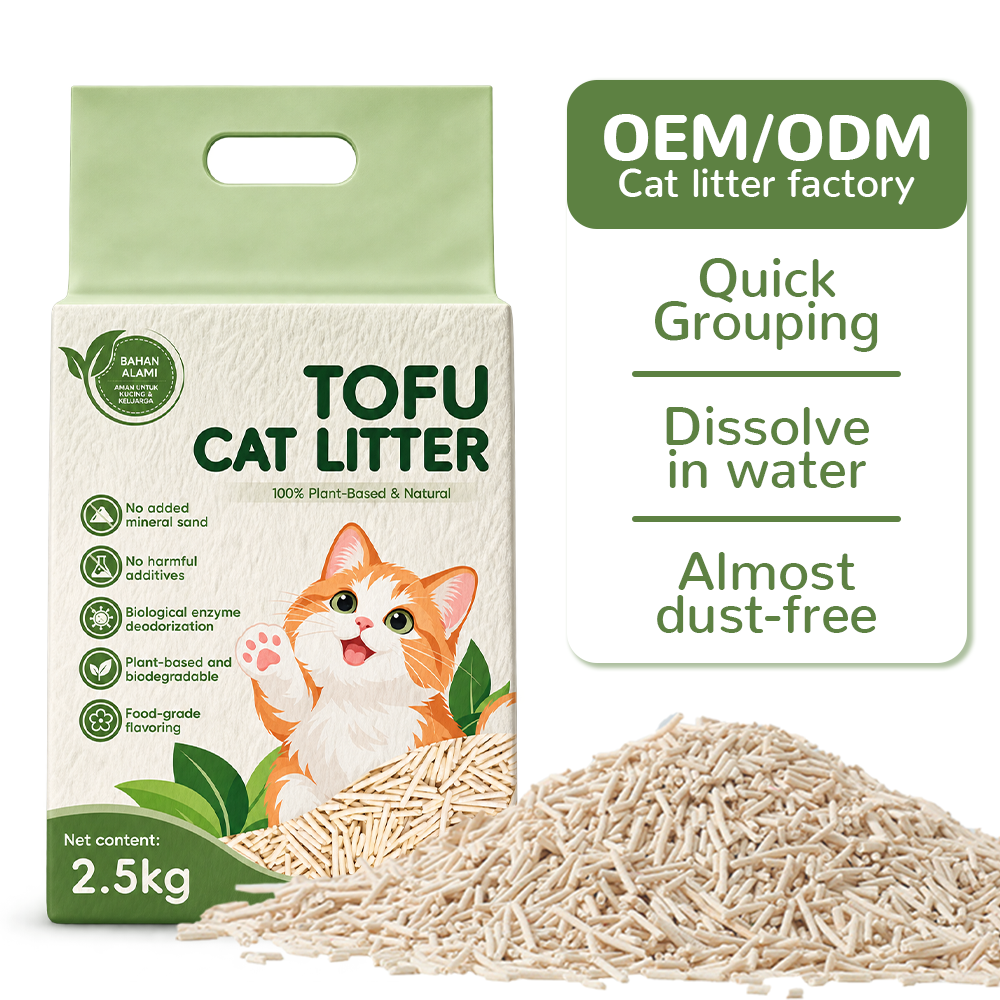
Premium Tofu Cat Litter Natural Plant Based Clumping Low Dust Odor Control for Cats Wholesale Supplier Exports
- Pellet Diameter: 1.5mm / 2.0mm Micro-Strip
- Absorption Index: > 400% w/w
- Clumping Time: ≤ 2.5 Seconds
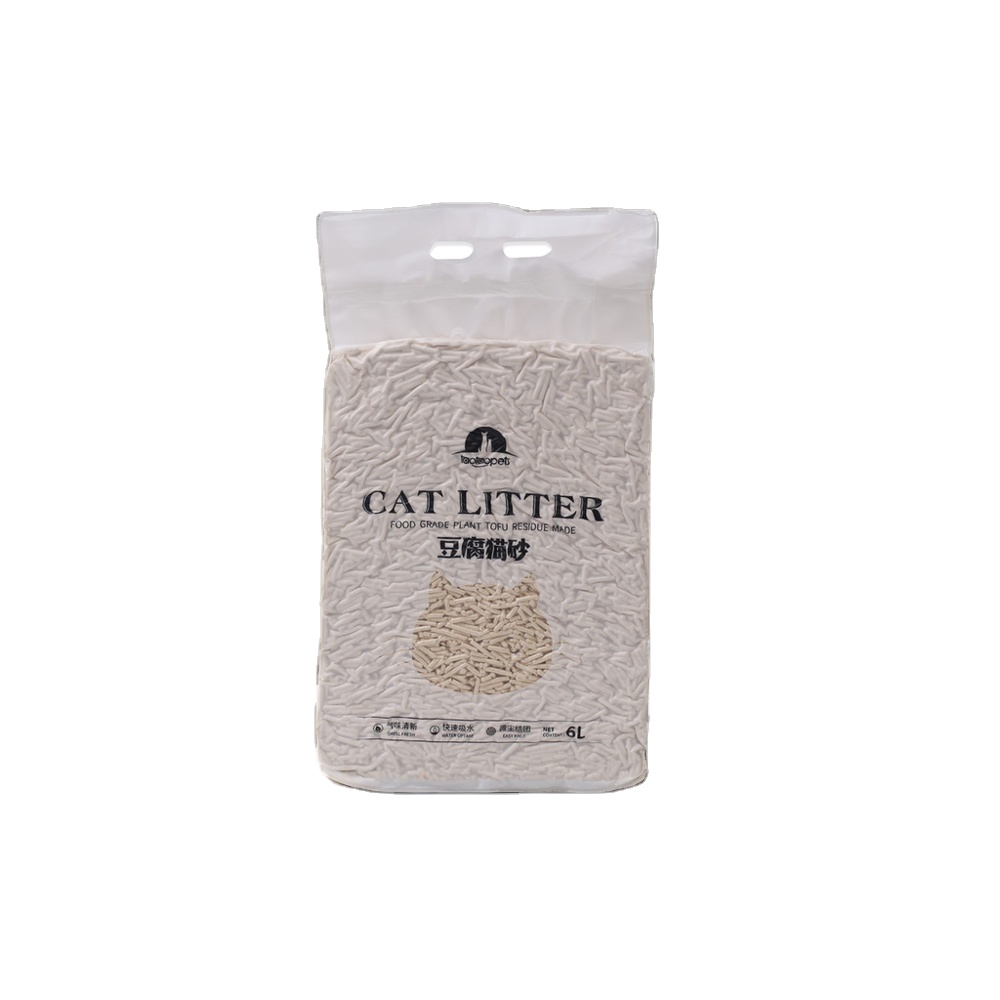
Wholesale 2.5KG Corn-Based Tofu Litter for Cats Custom Logo Natural Plant Dust Free Flushable Cat Litter Box
- Standard Packaging: 2.5 KG Vacuum Block / 6L
- Dust Particulate: < 0.1% Negative Air Classified
- Flush Dissolution: Complete in < 15s
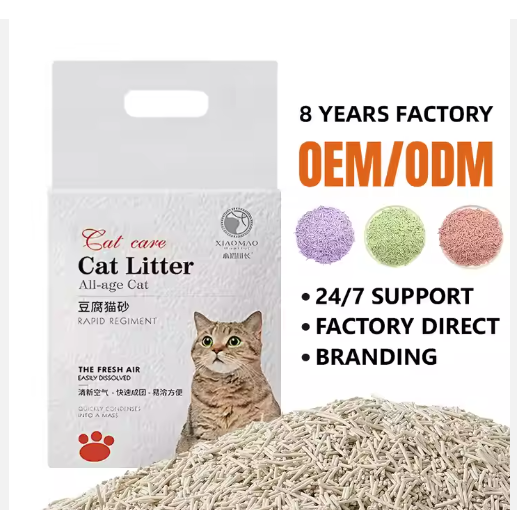
Factory cat Litter Eco-friendly Natural Dust Free Organic Cat Sand Premium Quick Clumping Tofu Cat Litter
- Binder Agent: Natural Guar & Food Starch
- Formaldehyde: 0.00% Lab Verified (SGS)
- Hardness Rating: > 55N Crush Strength
Premium Tofu Cat Litter Biodegradable Flushable Quick Clumping Low Dust Pet Supplies Wholesale Manufacturer Export
- Bulk Packaging: Ton Bags or 10L Poly-Bags
- Microbial Count: < 100 CFU/g (Heat Sterilized)
- Biodegradability: 100% Home Compostable
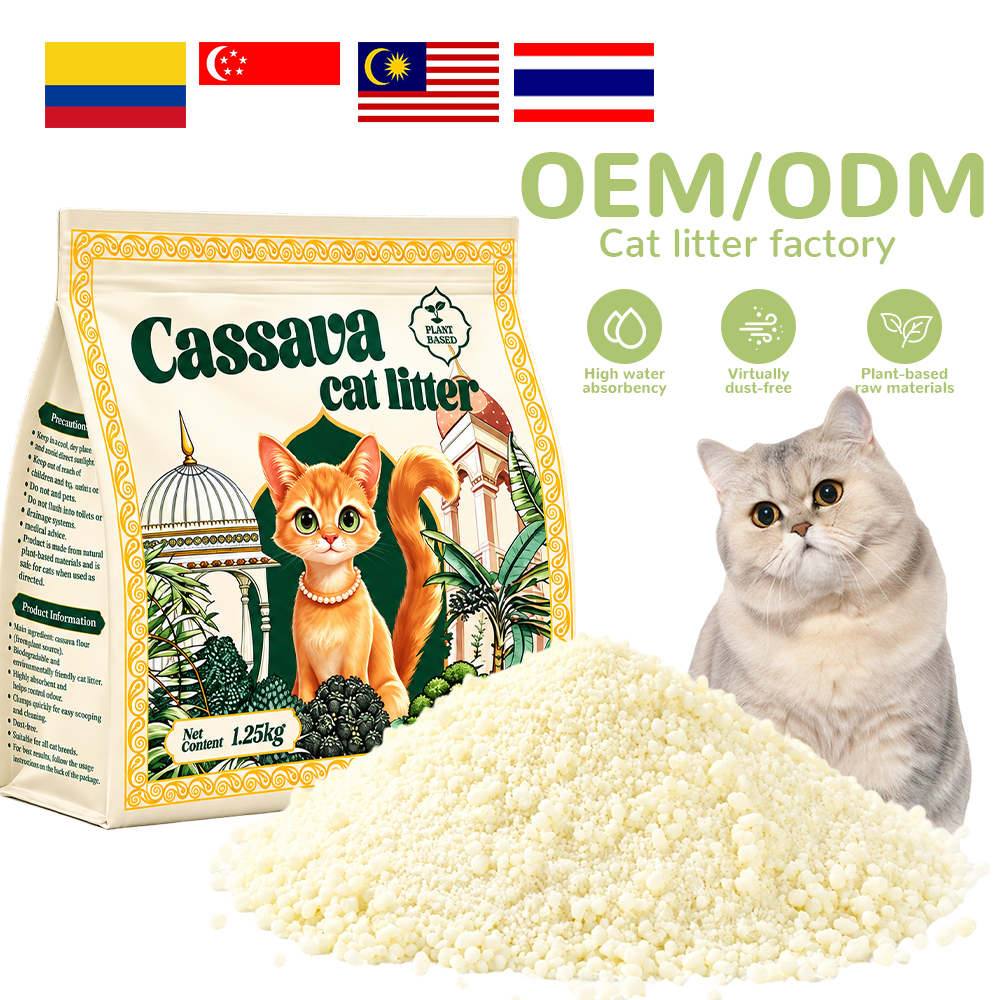
Premium Cassava Cat Litter Private Label OEM ODM Flushable Natural Plant Based Cat Litter for Bulk Wholesale Export
- Particle Form: Crushed Micro-Granules
- Color Tone: Natural Clean Pearl White
- Sensory Scent: Unscented / Grain Fragrance
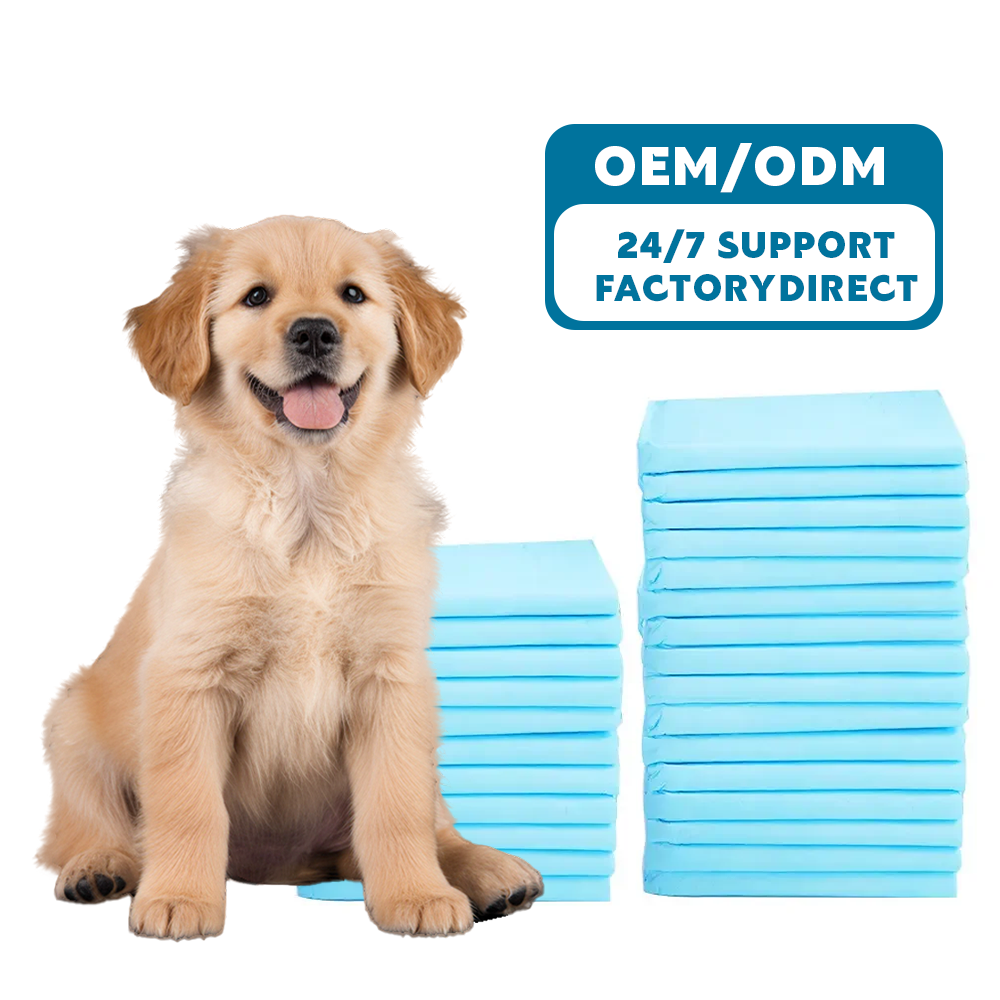
Pet Supplies Customized Super Absorbent Pet Training Pads Non-slip Pet Pads Disposable Dog Cat Training Pads Diapers
- Structure: 5-Layer SAP Diamond Embossed
- Dimensions: 33x45cm, 45x60cm, 60x90cm
- Core Retention: Up to 1,200ml Liquid Lock
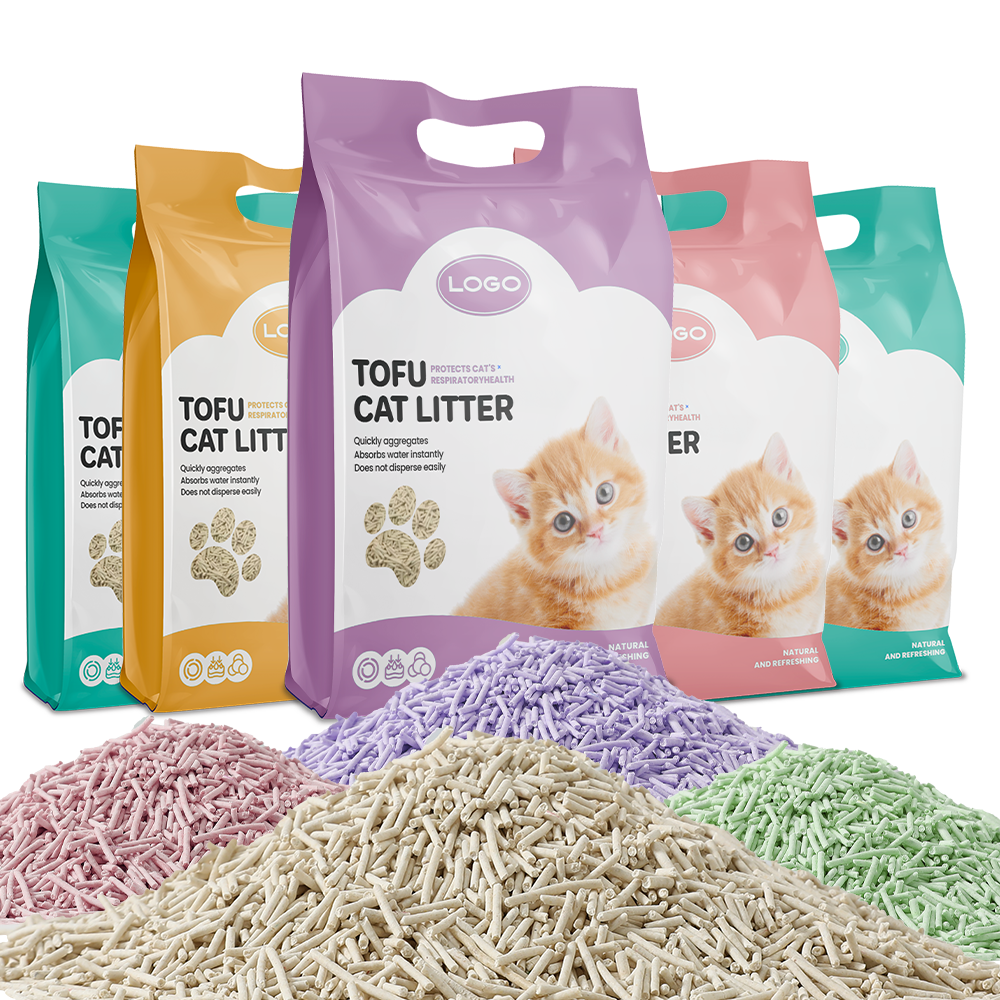
New Inventions Cat Litter Multiple Flavors Colors Tofu Sand With Natural Fragrance Corn-Based Ball Pattern Clumping Effect
- Morphology: Engineered Spherical Beads
- Tracking Index: Anti-Paw Sticking Surface
- Functional Additives: Activated Carbon / STA Crystals
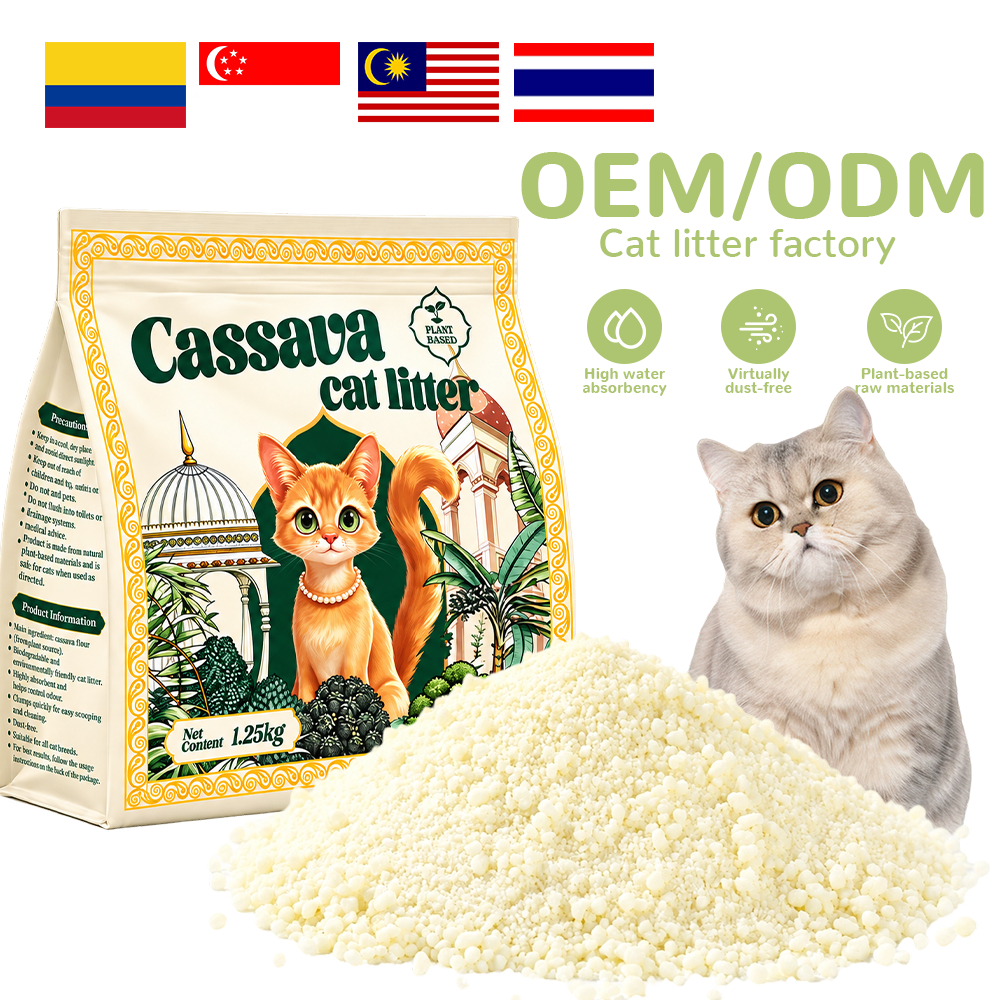
Premium Cassava Cat Litter Fast Clumping Low Dust Natural Plant Based Odor Control Cat Sand OEM ODM Factory Wholesale
- Bulk Density: 600 - 680 g/L Compact Mass
- Dust Elimination: Quad-Screen Vibratory Shaker
- Odor Suppression: Natural Enzymatic Neutralization
Technical Comparison for Professional Buyers
Every retail market balances consumer habit, price sensitivity, sewage disposal regulations, and ocean freight bulk density constraints. Review our engineering matrix before placing seasonal contract commitments.
| Substrate Chemistry | Clump Cohesion Strength | Absorption Ratio (w/w) | Airborne Dust Index | Sewer Biodegradation | Shipping Density (Payload / 40HQ) | Core Target Markets |
|---|---|---|---|---|---|---|
| Natural Tofu (Soy Fiber) | High (≥ 50N) | 400% - 480% | < 0.15% (Ultra-Low) | Instant Dissolution | Approx. 18 - 20 MT | Japan, South Korea, EU Premium, Singapore |
| Raw Cassava (Tapioca Root) | Extreme (≥ 65N) | 450% - 550% | < 0.05% (Near Zero) | Rapid Flush Dispersion | Approx. 21 - 23 MT | North America Specialty, UK, Scandinavia |
| Sodium Bentonite (Montmorillonite) | Dense Shell (≥ 60N) | 250% - 320% | 0.5% - 1.2% (De-dusted) | Non-Flushable (Plugs Pipes) | Approx. 24 - 26 MT (Weight Maxed) | Big Box Mass Retail, Middle East, LatAm |
| Inorganic Silica Gel (Synthetic) | Non-Clumping (Trap) | 120% - 180% (Saturation) | < 0.3% | Non-Flushable (Landfill) | Approx. 14 - 16 MT | Specialty European Pharmacy & Supermarkets |
*Note: Laboratory metrics are derived using automated pneumatic droppers and 15ml physiological saline drops under standardized ambient conditions (22°C, 55% RH) at Hebei Chupen Testing Laboratory.
Global Cat Litter Procurement Trends & R&D Horizons
Navigating environmental ESG mandates, ocean freight volatility, and hyper-segmented consumer preferences requires deep forward visibility into substrate chemistry and distribution logistics.
1. Hyper-Dense Packaging & Ocean TEU Freight Economics
Global logistics disruptions have permanently elevated shipping cost as a percentage of landed Cost of Goods Sold (COGS). Traditional loose-fill mineral litters waste up to 35% of interior container volume in interstitial air pockets. Next-generation procurement favors brick-shape vacuum degassed packaging for tofu and cassava substrates.
By implementing automated robotic compaction, importers achieve up to 23 metric tons per 40-foot High Cube (40HQ) container. This increases retail unit density per pallet by 28%, significantly lowering landed cost-per-bag across trans-Pacific and Asia-to-Europe lanes.
2. Stringent VOC Odor Elimination & Microbiome Safety
Modern urban households in multi-cat apartments reject artificial synthetic masking perfumes. The industry trend heavily tilts toward active biological entrapment. Advanced formulations now combine activated botanical carbons, zeolitic lattice sieves, and zinc ricinoleate chelating agents.
Instead of overpowering human olfactory receptors with heavy floral scents, modern litters permanently sequester gaseous hydrogen sulfide ($H_2S$) and trimethylamine molecules inside micro-porous channels while sustaining zero fungal spore counts via food-grade sterilization.
3. Regulatory Pressures: Flushability & Municipal Landfill Taxes
Municipal solid waste guidelines throughout the European Union and metropolitan East Asia are restricting single-use, non-biodegradable mineral clay disposal in household municipal streams. Bentonite, when discarded into urban sewers, expands and generates pipe calcification blocks.
Consequently, major supermarket chains are aggressively expanding shelf-space for water-soluble plant litters. Cassava and soy fibers unravel within 15 seconds of immersion, dispersing entirely into organic slurry safe for urban water treatment infrastructure.
4. Multi-Category Container Consolidation (The Nanhe Hub Advantage)
Sourcing small batches across disparate vendors creates freight chaos, duplicative customs clearing costs, and mismatched inventory turns. Modern B2B buyers consolidate heavy clumping cat litter with high-cube, lightweight pet hygiene products.
Utilizing our Nanhe District production ecosystem, global importers routinely combine 1,000 cartons of tofu cat litter, 300 cartons of 5-layer super-absorbent puppy training pads, and injection-molded litter boxes inside a single shipping manifest, maximizing container space utilization.
5. Clean Labeling: Zero Dust & Hypoallergenic Demands
Feline asthma, upper respiratory sensitivities, and owner allergies have forced pet retailers to demand rigorous dust certification. Cheap pelletized litters suffer from mechanical friction breakdown during maritime transit, arriving with 3% to 5% fine dust sediment.
Advanced exporters utilize quadruple cyclone negative-pressure de-dusting towers and anti-attrition binders, keeping free particulate dust below 0.1% upon destination arrival even after thousands of nautical miles of shipping vibration.
6. Agile Private Labeling & Micro-Trial MOQs
The era of requiring 5-container commitments to start a custom brand is ending. E-commerce disruptors and specialty distributors require agile prototyping. Leading manufacturers offer dual-tier MOQ programs.
By maintaining unprinted ready-stock plain vacuum pouches and off-the-shelf export formulations, buyers can launch localized test runs with as little as 60 to 100 bags before scaling up to custom gravure-printed master runs of 13,000+ units.
Why Global Pet Distributors Source with Hebei Chupen
Located at the epicenter of China's pet manufacturing capital in Nanhe District, Xingtai, we unite direct factory manufacturing scale with strict Western compliance standards.
Geographic Cluster Power
Situated in Nanhe District, the industrial region producing over 60% of national pet supplies and 80% of pet staple feeds. Direct access to raw agricultural starches and deep partnerships across 50+ regional ancillary factories.
Dedicated Output Scale
Operating 11 high-speed production lines (5 dedicated Tofu, 3 Bentonite, 3 Silica). Daily output tops 3,000 MT of mineral clay and 150 MT of organic plant fiber substrates with 10,000 m² of staging storage.
Academic R&D Backing
Joint formulation development with China Agricultural University and Hebei Agricultural University. 9 in-house diagnostic instruments measuring crumb shear, moisture volatility, and microbial stability.
International Certification
Company verified onsite by SGS Group. Production facilities operate strictly under ISO 9001, ISO 22000, ISO 14001, and ISO 45001 management protocols. Full MSDS, test reports, and phytosanitary clearance supplied.
Tianjin Port Gateway: Fast Logistics to Global Waters
Our factory complex maintains direct express highway trucking to Tianjin Port (Xingang, CN), the primary northern maritime trade hub. This geographic proximity minimizes drayage transit time, prevents moisture exposure during domestic transit, and facilitates weekly scheduled sailings to North America, Rotterdam, Hamburg, Busan, Yokohama, and Middle Eastern ports under FOB, CIF, EXW, and DDP terms.
Frequently Asked B2B Procurement Questions
Clear, objective answers addressing minimum order volumes, custom packaging, testing standards, and logistics consolidation.
What is the standard MOQ for private-label vs. stock packaging?
For trial market tests, we provide stock formulation bags with unprinted neutral barrier packaging starting as low as 60 to 100 bags. For custom brand printing (multi-color rotogravure or matte laminate BOPP/PE bags), custom manufacturing runs typically begin at 13,000 bags for tofu/cassava and 500 to 10,000 units for bentonite, matching cylinder print runs.
How do you control mold and moisture during long ocean transit?
Plant-based substrates (pea, soy, cassava) are dried in industrial hot-air fluid beds to maintain moisture strictly under 9.0%. Finished bags undergo high-vacuum hermetic heat sealing and are bundled inside water-resistant master outer bags or export-grade double-corrugated master cartons containing high-absorption desiccant strips.
Can you provide combined shipments with non-litter pet goods?
Yes. Leveraging our integrated manufacturing group in Nanhe, we consolidate multiple pet categories into one container. Importers frequently combine heavy cat litter pellets at the bottom of the container with lightweight 5-layer puppy training pads, splash-proof litter boxes, or dry pet treats on top, significantly lowering overall freight cost per SKU.
What third-party certifications and audit documentation are available?
Our company premises are verified onsite by SGS Group. Production facilities hold accredited certifications for ISO 9001 (Quality), ISO 22000 (Food Safety), ISO 14001 (Environmental Management), and ISO 45001 (Occupational Safety). For each shipment, we issue full Material Safety Data Sheets (MSDS), SGS lab reports, and official Phytosanitary clearance certificates.
What fragrance formulations and visual options are available?
We offer an extensive olfactory library: Natural Original, Peach Blossom, Jasmine, Green Tea, Fresh Coffee, Lavender, and Baby Powder. We also offer functional visual beads (active charcoal micro-granules, STA blue/pink deodorizing crystals). All aromatic agents are IFRA-compliant and food-grade safe, avoiding volatile toxic petrochemical scents.
What standard international commercial terms (Incoterms) do you accept?
We regularly execute contracts under FOB (Tianjin/Qingdao), CIF, CFR, EXW, and DDP (Delivered Duty Paid directly to your distribution center). Supported payment instruments include wire transfer (T/T), Irrevocable Letters of Credit at Sight (L/C), Documents Against Payment (D/P), and common international currencies (USD, EUR, GBP, AUD, RMB).
Build Your Scalable Cat Litter Supply Chain Today
Whether you are engineering a custom private-label formulation, seeking lower landed container costs, or need rapid SGS-verified production, our export engineering team provides quotes within 12 hours.