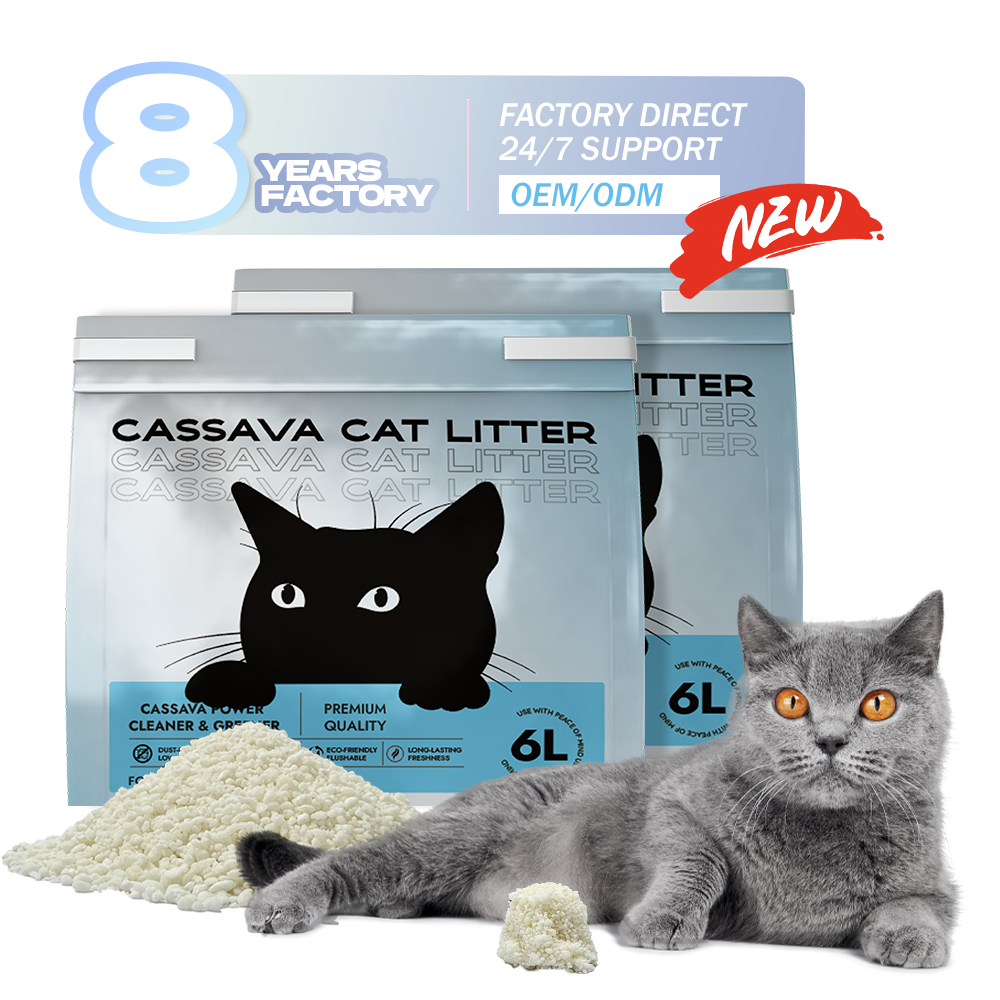
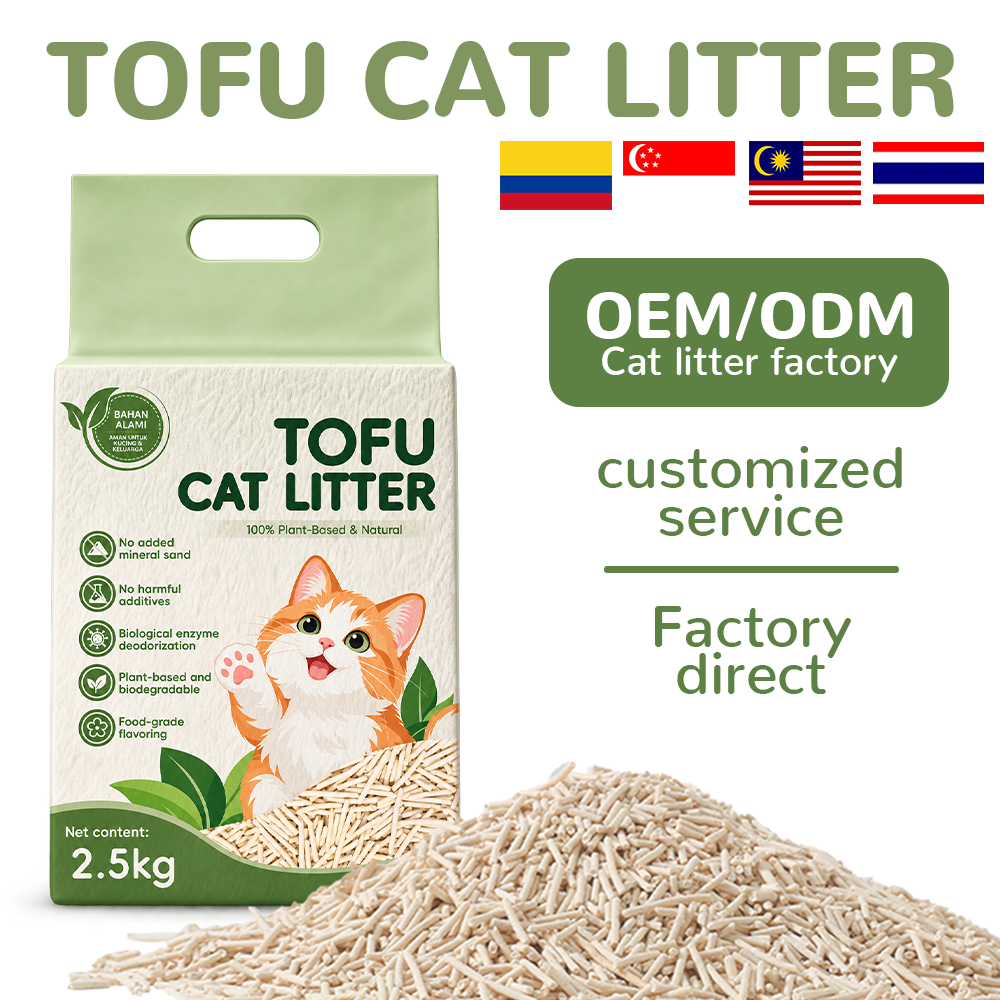
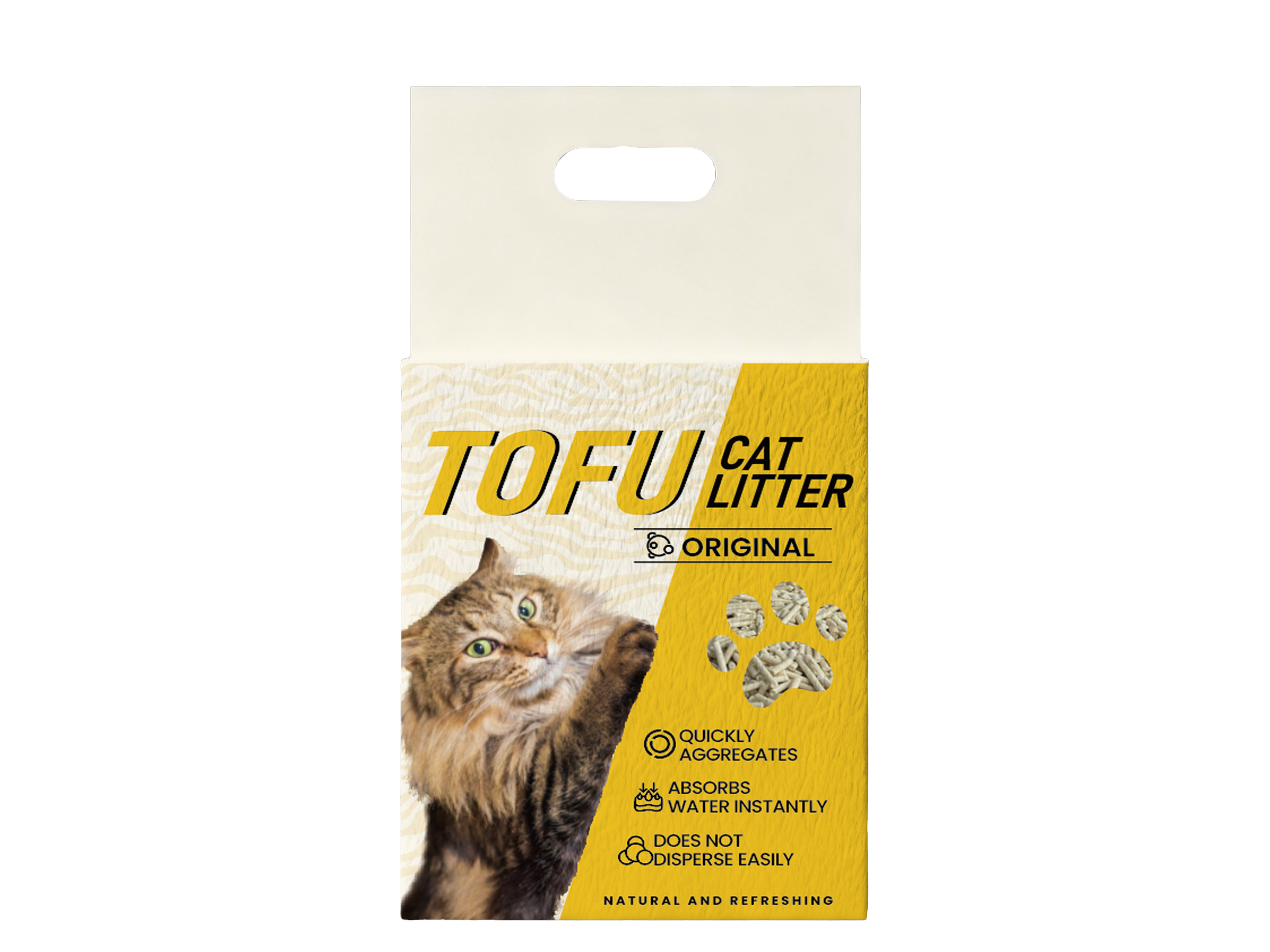
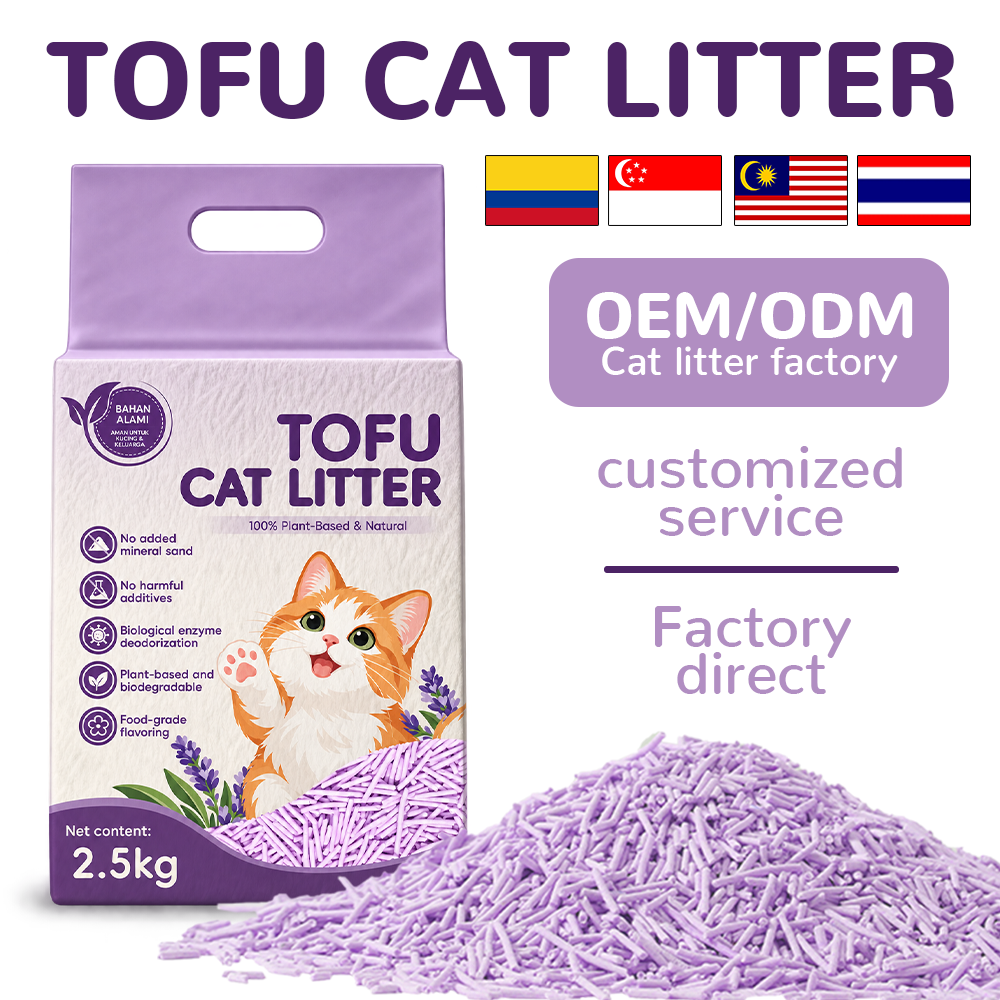
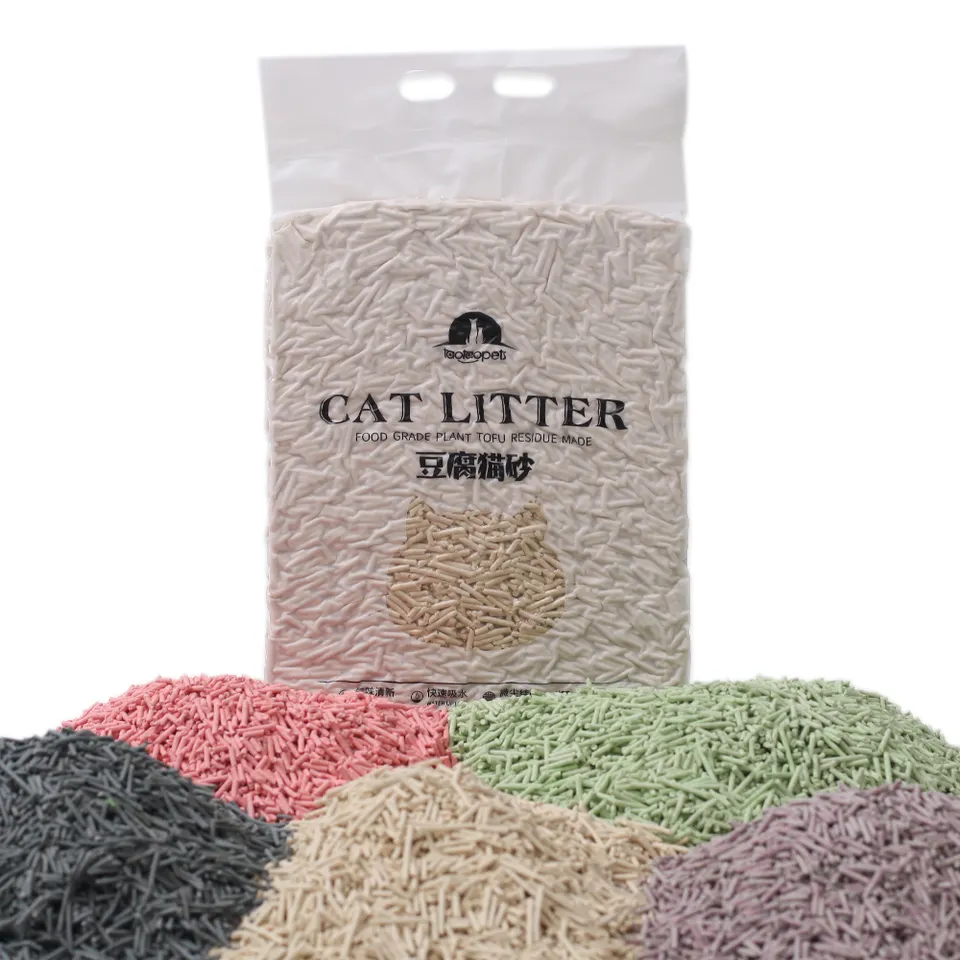
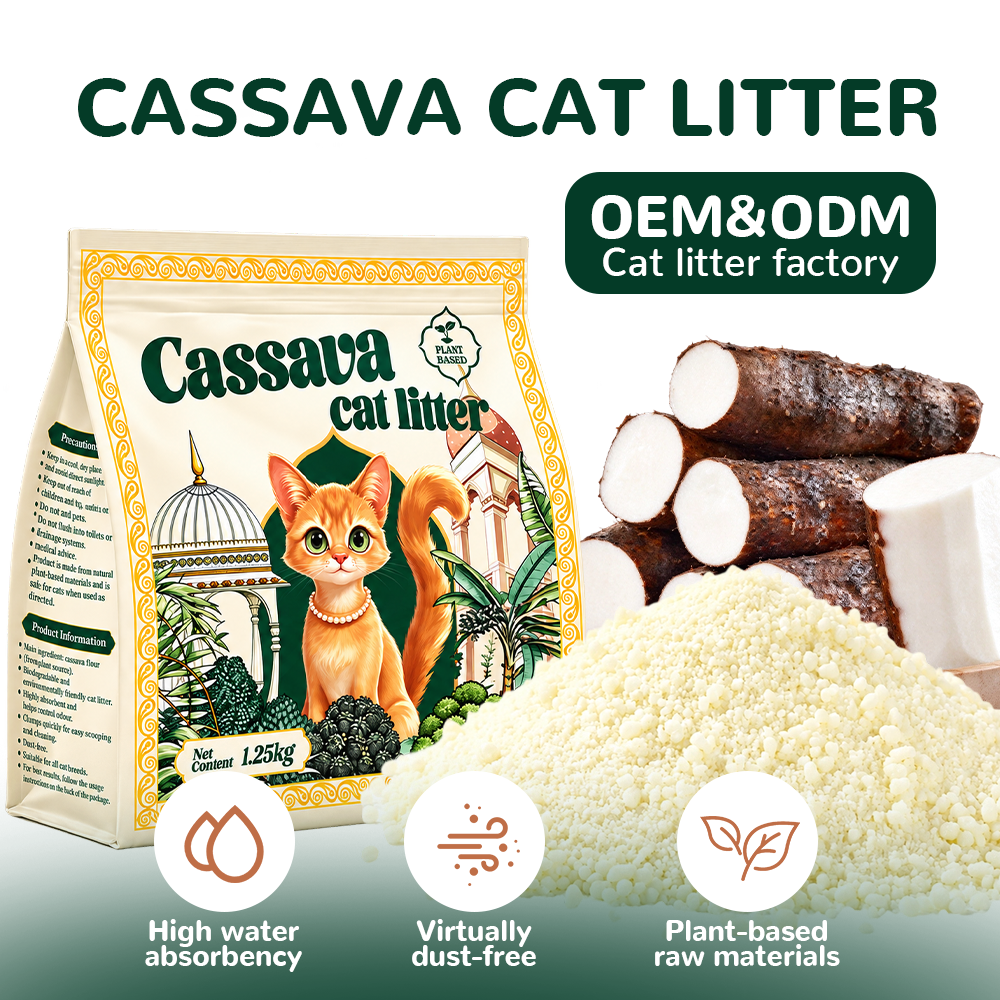
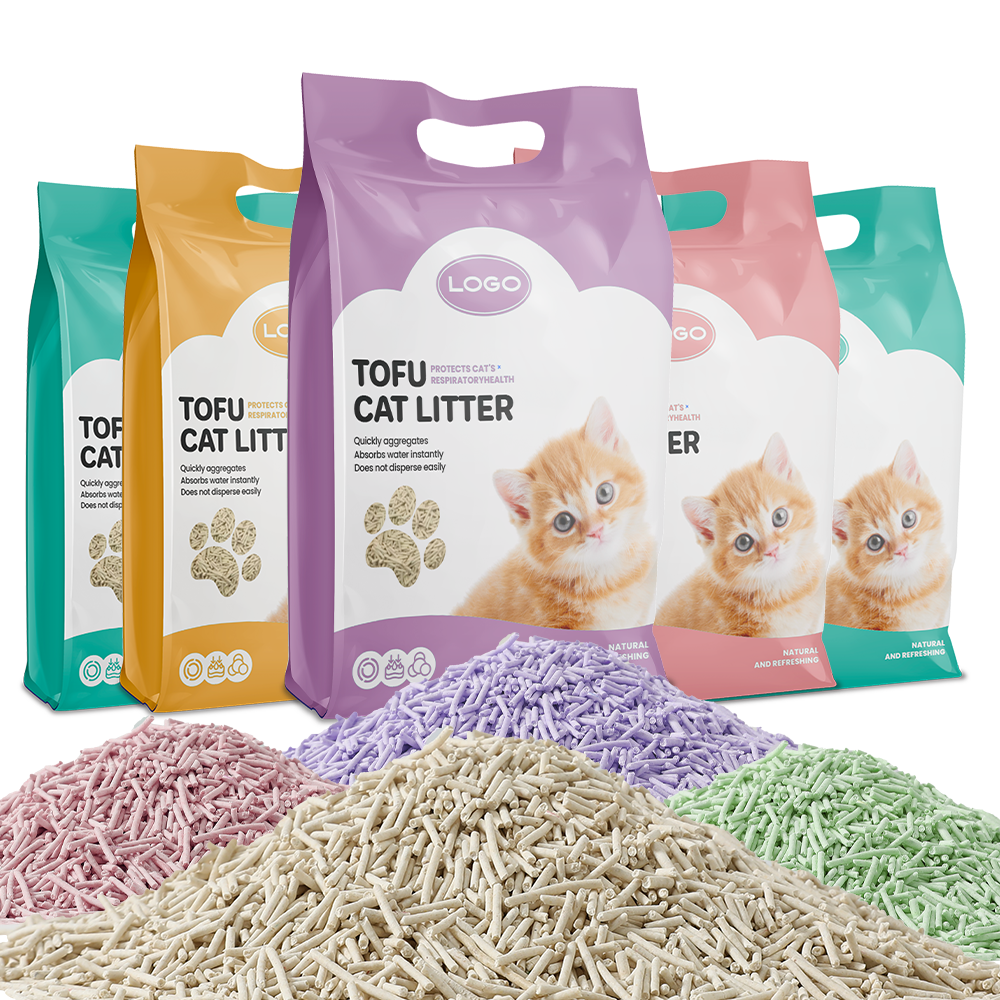
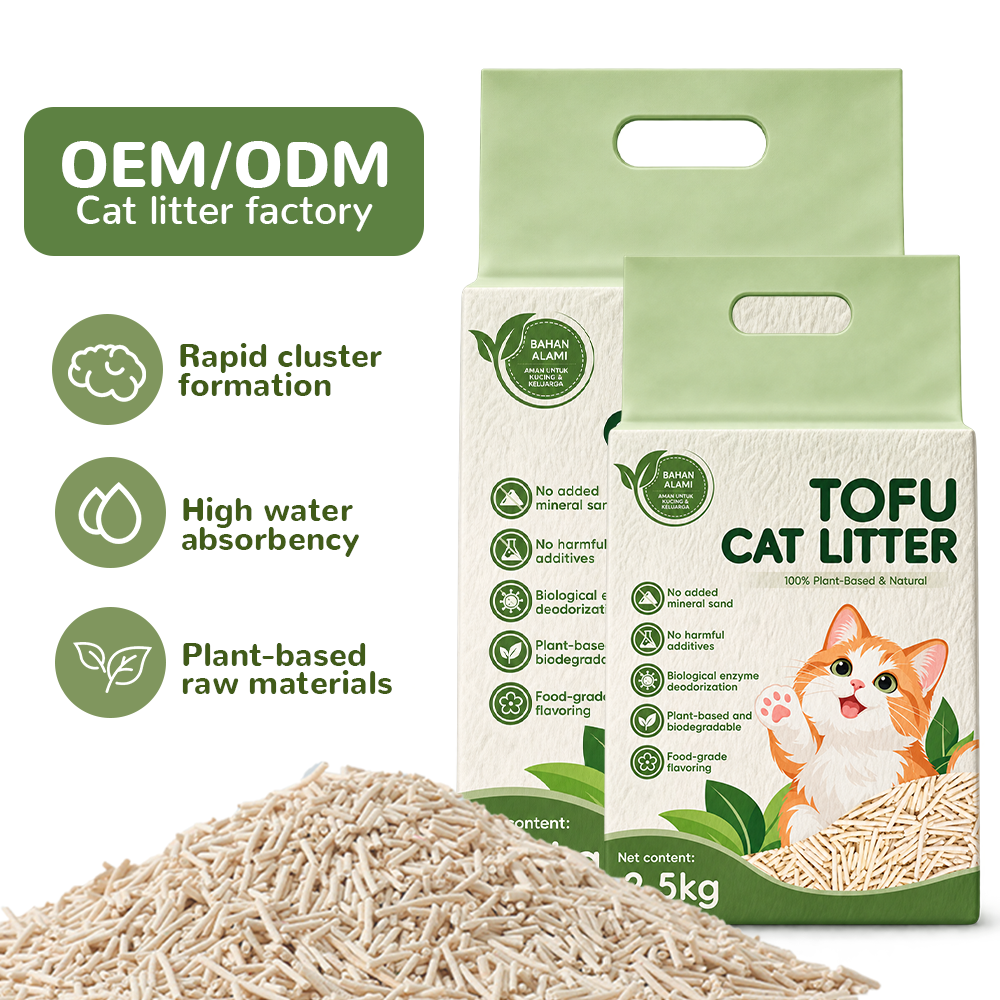
Featured Low-Dust Cassava & Eco Litter Series
Manufactured in Hebei Chupen's automated production facility. Fully compatible with private-label customization, optimized moisture tolerances, and high-yield agglomeration.
Enterprise Scale & Verification Metrics
Verified on-site by SGS Group. Certified to ISO 9001, ISO 22000, ISO 14001, and ISO 45001.
Why Dust-Free Cassava Litter Is Disrupting Global Pet Care
The global pet hygiene sector is undergoing a massive structural shift away from mined bentonite clay and synthetic chemical silica toward biologically renewable, ultra-low dust plant polymers. At the forefront of this industrial transformation is cassava cat litter—manufactured from processed Manihot esculenta (tapioca) root starch, often co-extruded with pea fiber or activated corn derivatives.
From a chemical engineering perspective, native cassava starch offers a high concentration of amylopectin (roughly 80-83%), an extensively branched alpha-D-glucose polymer. When exposed to hydration, these amylopectin molecules exhibit instantaneous swell ratios and form an ultra-dense, cohesive mechanical mesh through physical gelation. Unlike bentonite which relies on electrostatic swelling between smectite clay sheets, cassava creates a tight structural agglomeration in less than 2.5 seconds without requiring chemical binders or synthetic adhesives like polyvinyl alcohol (PVA).
For international buyers—including pet supply chain managers, brand owners, and FMCG importers across North America, the European Union, Australia, and East Asia—the commercial imperative for sourcing genuine dust-free cassava litter comes down to three technical vectors: feline respiratory health, municipal sewage flushability, and container payload weight optimization.
Sub-Micron Dedusting
Our multi-stage cyclone vacuum extraction system scrubs out particulates down to <2.5 microns, safeguarding felines and human households against pulmonary inflammation and crystalline silica silicosis.
Rapid Water Solubilization
Upon submersion in standard toilet pipe volumes, the hydrogen bonds destabilize swiftly. Clumps dissolve into soft organic slurries within 15–30 seconds, preventing municipal plumbing blockages.
Freight Weight Economics
With an apparent bulk density of roughly 0.52 to 0.58 g/cm³ compared to 0.85–0.98 g/cm³ for bentonite, freight forwarders ship higher active volume per metric ton, lowering landed retail unit costs.
Comparative Matrix: Cassava vs. Traditional Litter Substrates
Professional procurement teams evaluate substrates across specific empirical thresholds: friability, clump shear strength, moisture release, and tracking characteristics. The following technical comparison benchmarks our OEM-grade cassava formulation against legacy products:
| Evaluation Parameter | Hebei Chupen Cassava Litter | Standard Sodium Bentonite | Traditional Tofu (Soy Pellets) | Silica Gel Crystal Litter |
|---|---|---|---|---|
| Base Raw Material | Purified Cassava Root Starch + Corn Matrix | Mined Montmorillonite Mineral | Byproduct Okara (Soybean Pulp) | Synthesized Silicon Dioxide (SiO₂) |
| Respirable Dust Index (<10µm) | <0.05% (Near Zero Dust) | 1.8% – 4.5% (High Particulate) | 0.2% – 0.6% (Low) | 0.5% – 1.2% (Moderate) |
| Agglomeration Speed | 1.8 – 2.5 seconds (Instant) | 3.0 – 6.0 seconds | 2.5 – 4.5 seconds | Non-clumping (Absorption only) |
| Clump Tensile Hardness | >850 g/cm² (Zero Bottom Sticking) | >900 g/cm² (Hard Rock) | 650 – 750 g/cm² (Moderate) | N/A |
| Biodegradability & Disposal | 100% Home Compostable & Flushable | Non-biodegradable (Landfill only) | Flushable & Compostable | Non-biodegradable (Landfill only) |
| Bulk Density (g/cm³) | 0.52 – 0.56 (Ultra-lightweight) | 0.88 – 0.95 (Heavy freight) | 0.58 – 0.64 (Medium-light) | 0.45 – 0.50 (Lightweight) |
Future Sourcing & Procurement Trends for Importers (2025–2030)
As retail margins in traditional mass-merchandise channels compress, category leaders must pivot toward value-added formulations and supply chain decarbonization. Our export advisory unit monitors shifting import directives and retail point-of-sale patterns across North America, Europe, and Australasia. We identify four core trends governing cassava and plant-based litter procurement:
1. Strict Regulatory Restrictions on Inhalable Crystalline Silica: Environmental health and occupational safety bodies in the European Union and the United States (notably California Proposition 65) are intensifying surveillance on quartz and respirable crystalline silica present in mined clay litters. Pet owners increasingly recognize that chronic particulate inhalation exacerbates feline feline asthma and human respiratory allergies. Consequently, top-tier distributor tenders are transitioning to starch-based, zero-silica certifications as a baseline barrier to entry.
2. Post-Consumer Packaging Regulations (EPR Directives): Importers in Germany, France, the UK, and Canada face steep Extended Producer Responsibility fees on multi-layer non-recyclable metalized foil plastics. Future-ready buyers are now specifying 100% industrially compostable packaging (such as PLA/PBAT laminated bags) or mono-material recyclable PE/PE structures. Chupen's integration of certified compostable packaging empowers distributors to lower landfill-tax overheads while earning premium retail positioning.
3. Transition from Cylindrical Pellets to Micro-Granular Textures: Early plant-based litters were predominantly produced as 2.0mm–3.0mm cylindrical extruded rods. While functional, domestic cats frequently display behavioral resistance due to unyielding paw feel. The current global sourcing trend favors crushed micro-granule cassava litter (0.8mm–1.8mm), which perfectly replicates the soft, excavatable texture of natural desert sand without tracking dust throughout modern apartments.
4. Combined Container Logistics to Mitigate Inventory Risk: In an era of volatile ocean freight rates and cautious inventory replenishment cycles, single-commodity procurement models present working capital risks. Smart importers demand container consolidation flexibility. At Hebei Chupen, located in China's prime pet production cluster (Nanhe District, Xingtai), clients consolidate cassava cat litter, puppy training pads, silica litters, and commercial dry pet treats within the same 40ft High Cube container shipped out of Tianjin Port, significantly lowering landed handling costs per SKU.
The Technological Evolution of Dust-Free Cassava Manufacturing
Manufacturing dust-free cassava litter at commercial scale requires exact thermal control, particle sizing, and atmospheric conditioning. In substandard facilities, cassava litter exhibits brittleness during logistics transit, generating high "frictional dust" at retail unboxing. Hebei Chupen solves this structural weakness through an engineered three-tier processing pipeline:
Precision Starch Gelatinization: During the twin-screw extrusion phase, virgin cassava starch undergoes thermo-mechanical cooking where processing temperatures are calibrated within ±1.5°C. This optimizes gelatinization, binding amylose molecules into a flexible polymer matrix that resists crushing under high palletized shipping pressures.
Five-Stage High-Velocity Air Scrubbing: Unlike factories utilizing simple gravity sieves, our facility operates closed-circuit negative-pressure dust extraction units. Granules pass through five continuous air chutes and centrifugal cyclone collectors that eliminate micro-fines before packaging, guaranteeing an absolute dust-free claim (<0.05% particulate retention).
Biological Enzyme and Probiotic Infusions: Odor control in plant litters historically relied on masking perfumes. The next evolutionary wave integrates natural zinc ricinoleate, citric deodorizing complexes, and biological enzymes directly into the core matrix. These bio-catalysts neutralize alkaline ammonia (NH₃) and acidic hydrogen sulfide gases instantly at the molecular level upon cat urination, providing superior odor abatement without irritating chemical scents.
Why Top Global Brands Partner with Hebei Chupen
Strategically located in Nanhe District, Xingtai—the epicenter supplying 80% of China's pet food and 60% of its pet products—we deliver manufacturing excellence, institutional stability, and verified trade integrity.
Massive Industrial Scale
Operating 11 dedicated automated lines with a daily aggregate capacity exceeding 3,000 tons of bentonite, 150 tons of tofu/cassava litter, and 150 tons of silica, supported by a 10,000 m² clean warehouse for container loading.
Institutional E-E-A-T Verifications
Factory premises verified on-site by SGS Group. Certified to ISO 9001 (Quality), ISO 22000 (Food Grade Safety), ISO 14001 (Environmental Standards), and ISO 45001 (Occupational Safety) with complete patent portfolios.
Academic R&D Infrastructure
Continuous formulation development in institutional partnership with China Agricultural University and Hebei Agricultural University, backed by 9 in-house quality testing instruments and an internal feline trial panel.
Cluster Synergies & Multi-SKU Mixed Loading
Direct integration across 50+ regional allied manufacturing facilities. We consolidate cat litter, puppy pee pads, plastic litter trays, and premium pet food snacks into a single bill of lading (B/L) straight through Tianjin Port.
Full Spectrum Private Labeling
Comprehensive OEM/ODM capability spanning customized starch-to-fiber ratios, natural pantone tinting, botanical scent formulation, package graphic engineering, vacuum polybags, flat-bottom box pouches, and retail shelf display cartons.
Global Trade Execution
Experienced multilingual sales engineering team serving 35+ countries across Europe, North America, Japan, and Southeast Asia. We support FOB, CIF, EXW, and DDP with flexible T/T, L/C, D/P, and D/A payment mechanisms.
Frequently Asked Questions for B2B Cassava Litter Importers
Clear, definitive operational guidance to inform your commercial supplier selection process.
How does cassava cat litter achieve genuine "Zero Dust" compared to bentonite clay? +
What is the Minimum Order Quantity (MOQ) for custom private label cassava litter? +
Is pure cassava litter safe if accidentally ingested by kittens or adult cats? +
Can cassava cat litter withstand oceanic transit through high-humidity maritime zones? +
Can we mix cassava cat litter with other pet items like puppy pads or pet food in one container? +
Partner with China's Premier Cassava Litter Manufacturer
Accelerate your private-label profitability with verified manufacturing capacity, factory-direct OEM pricing, and comprehensive lab-tested dust control. Request technical data sheets, free sample sets, and customized pallet packaging estimates today.